

SNORKELLING

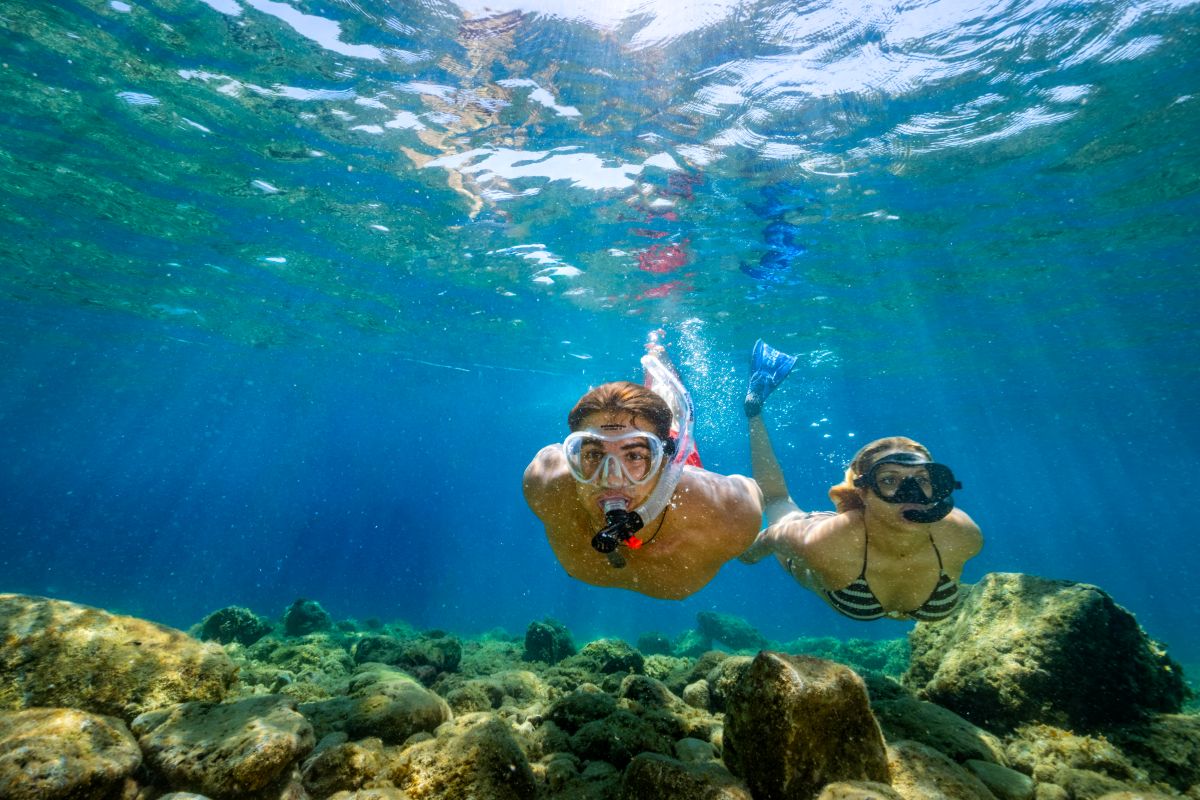
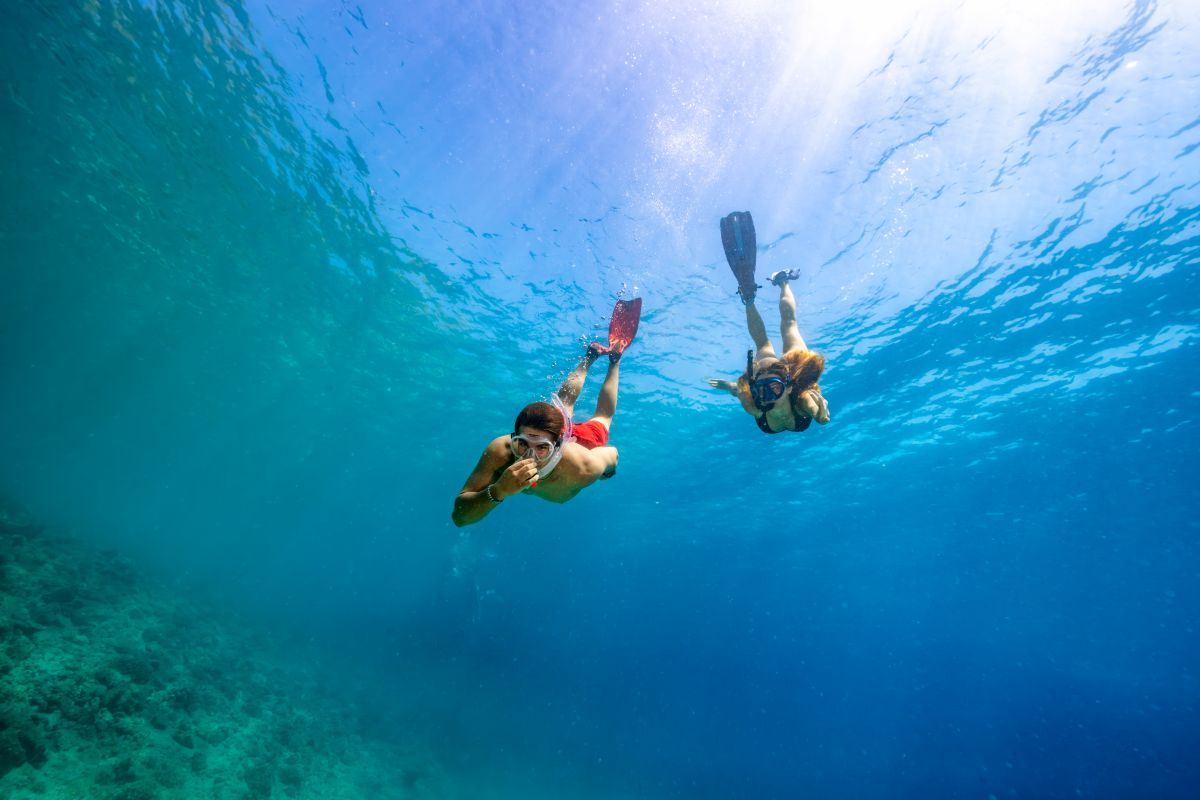
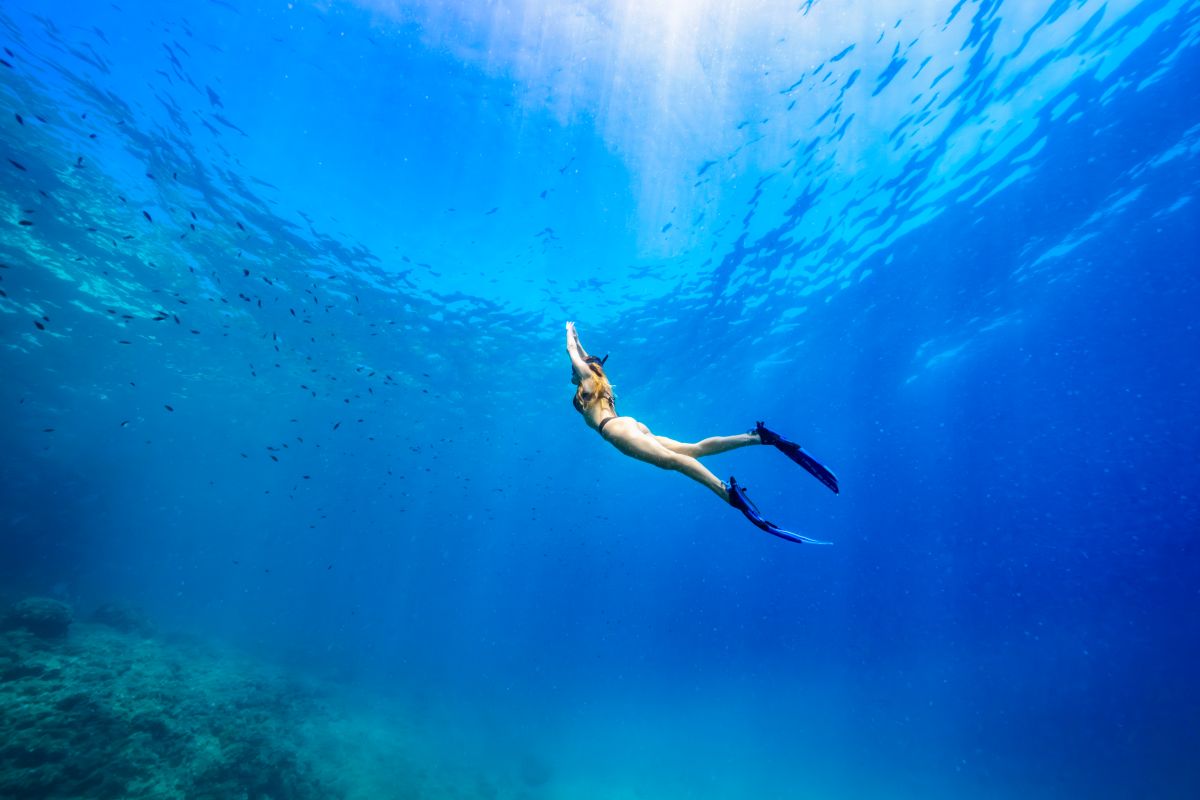
Dive into the magical underwater world of the Adriatic on the Crikvenica Riviera and explore its vibrant marine life!
Our winding coastline hides a variety of attractive snorkelling spots, each offering a unique encounter with natural beauty and crystal-clear waters. You’ll be amazed by the diversity of the marine creatures, the fascinating underwater landscapes and the perfect conditions for carefree snorkelling. Welcome to the world of marine adventures on the Crikvenica Riviera!
Snorkelling locations
LOCATION 1. – KAČJAK BEACH (DRAMALJ)
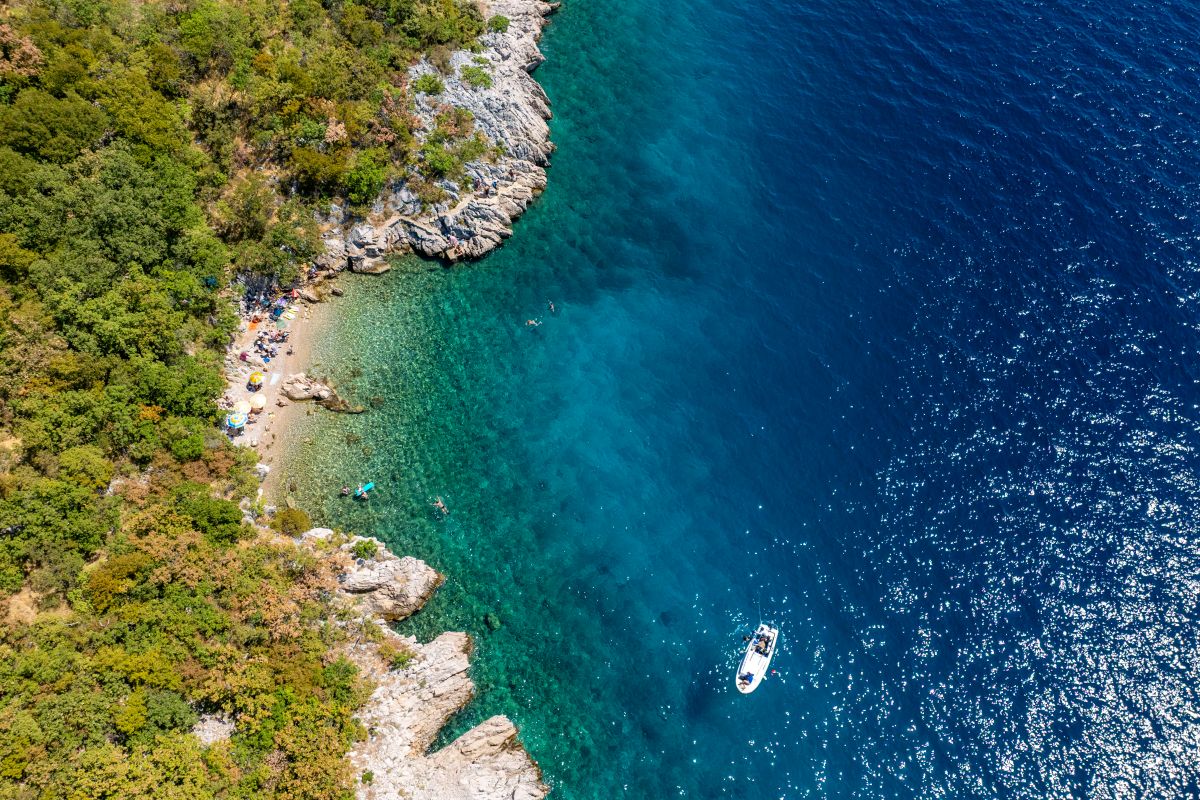
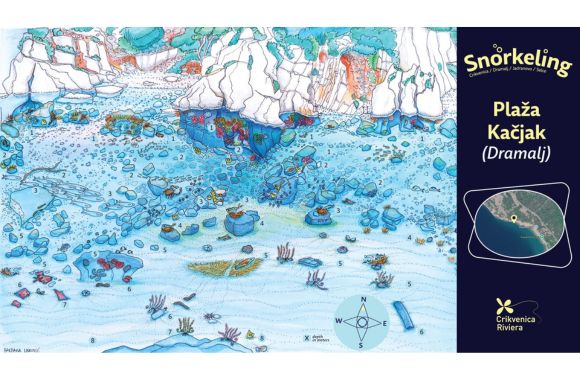
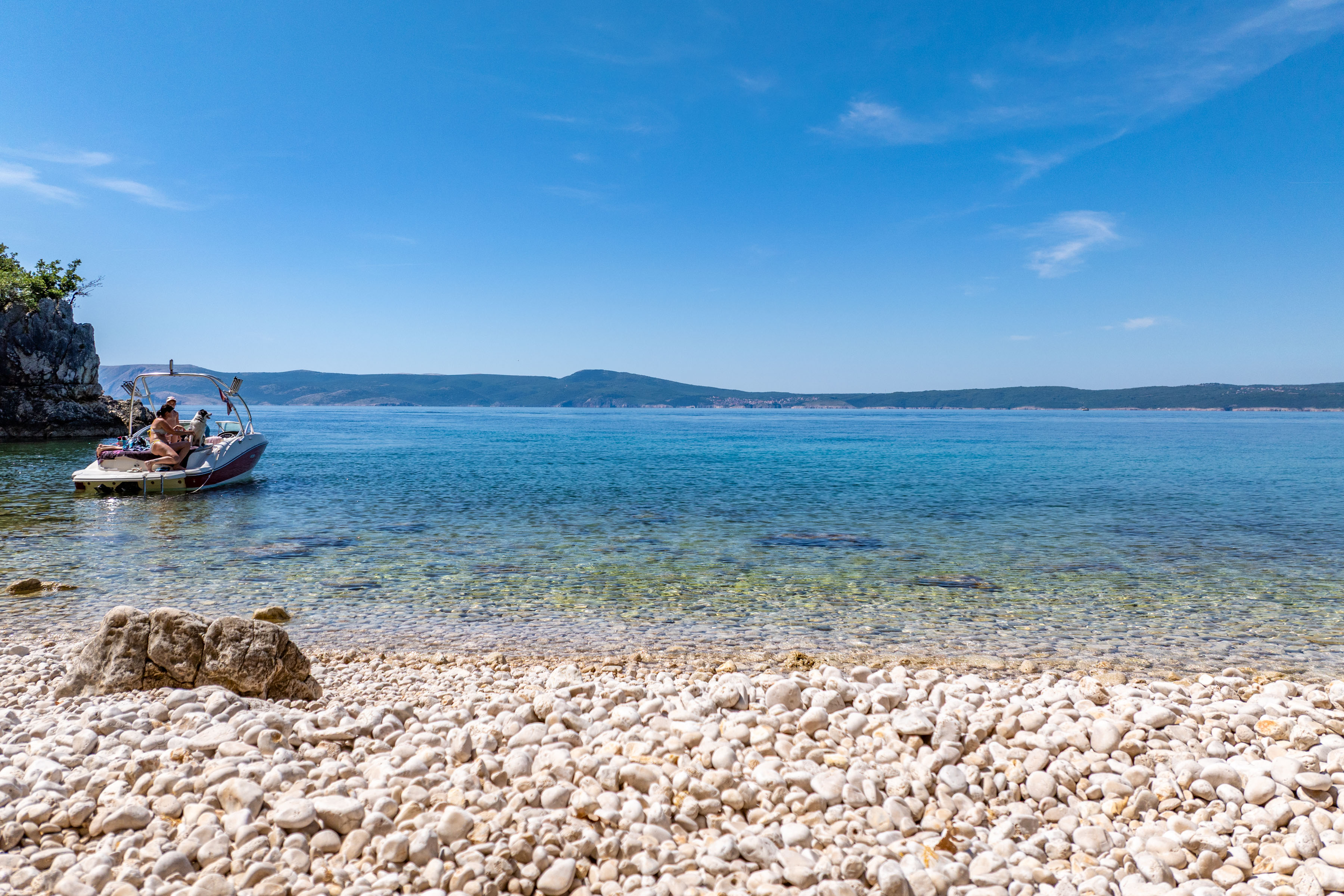
Kačjak Beach is located near the small peninsula of the same name, whose lush greenery offers refreshing shade during the summer heat. Historical sources record that the main Roman road to Dalmatia passed close to Dramalj, and one of the stops for refreshment and a safe overnight stay was Ad Turres – present-day Crikvenica, just 3 km away along the coast.
Ancient Roman maps didn’t show the terrain accurately, so it’s highly likely that the narrow peninsula marked as a nearby safe anchoring place on the 4th-century Peutinger Map was likely the Kačjak peninsula. Large stone mooring bollards from the Austro-Hungarian era are also still visible on the pebble beach, confirming that this cove has always been a safe harbour. Older locals call this beach ‘Luka’, which means ‘harbour’.
Corals in the shallows
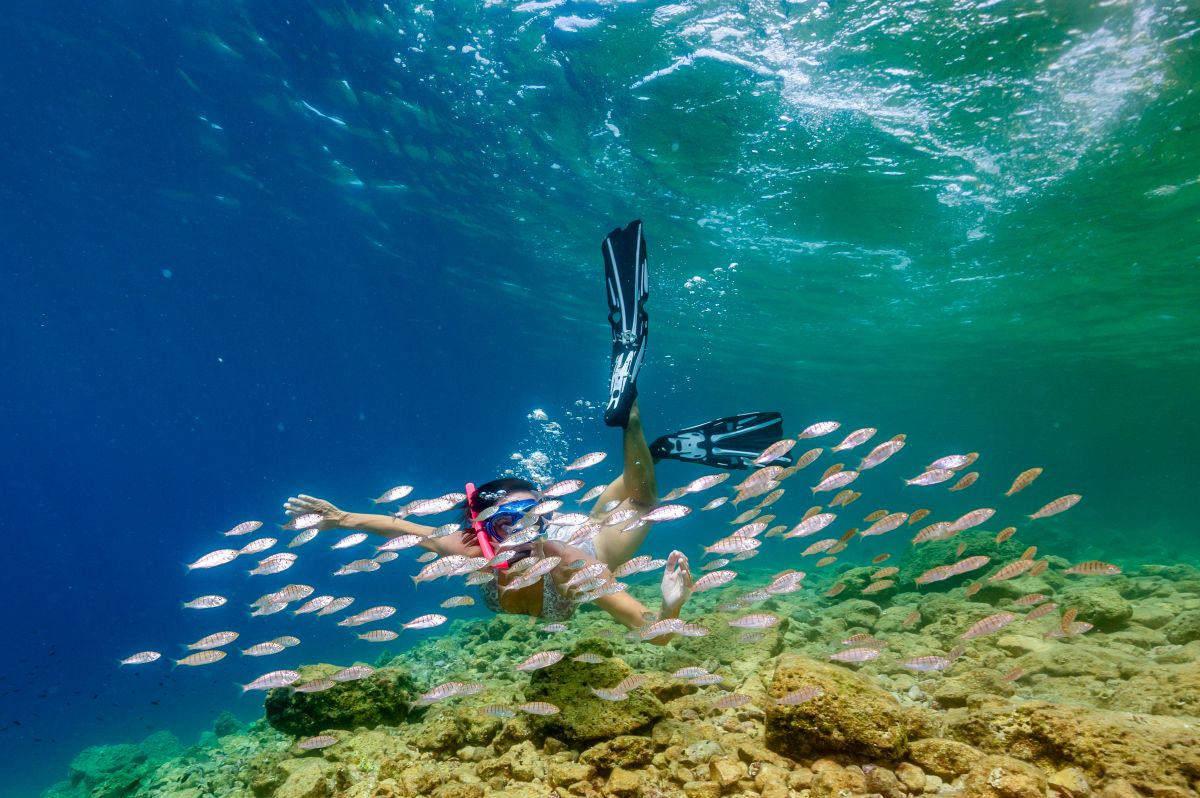
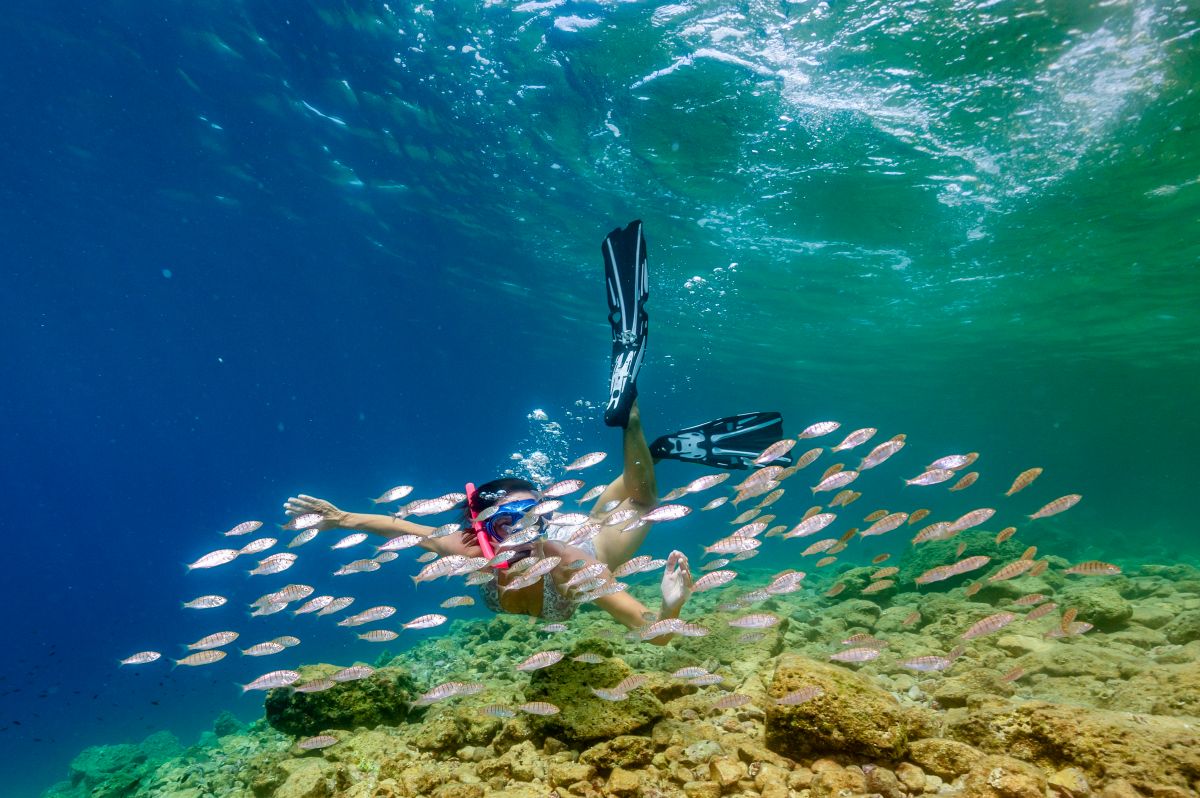
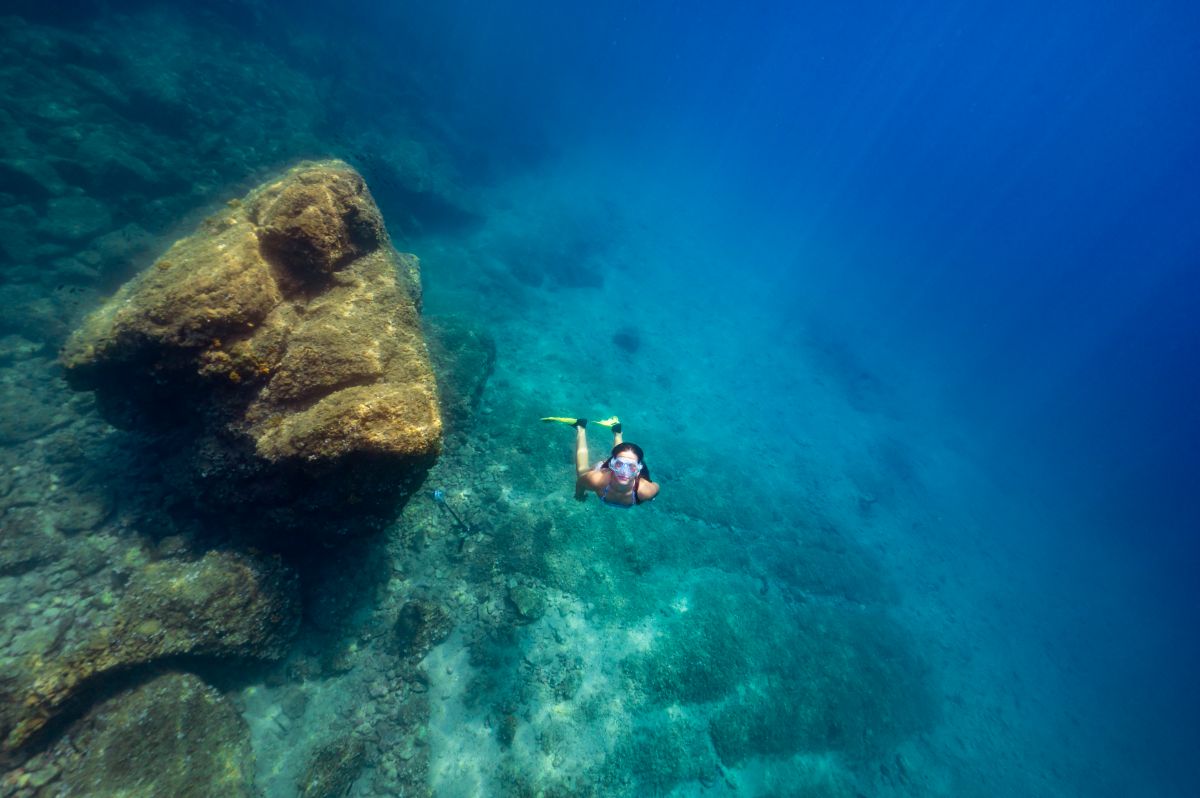
The snorkelling site is located at the very edge of the beach, where rugged rocks covered with Mediterranean macchia begin. You can start exploring at the large rock emerging from the sea, as the shallows are teeming with small, colourful fish. Just follow the coastline. While exploring the area around the rocks, you’ll feel the water getting much colder in places: try to find its source! Within a hundred metres, there are two freshwater springs flowing from the rocks beneath the shallows. Apart from the rather cold water, you’ll recognise them by their colourful rock surfaces with dark red shades, as well as the more vividly coloured sponges and algae.
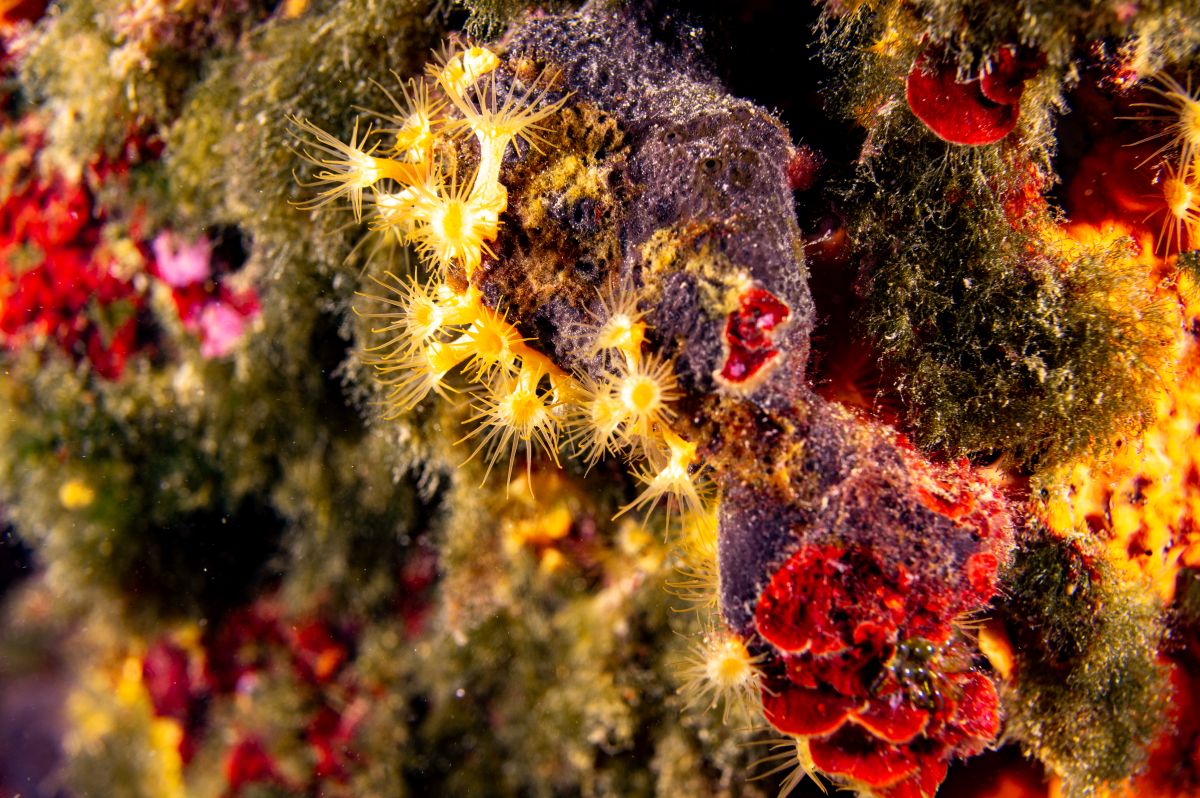
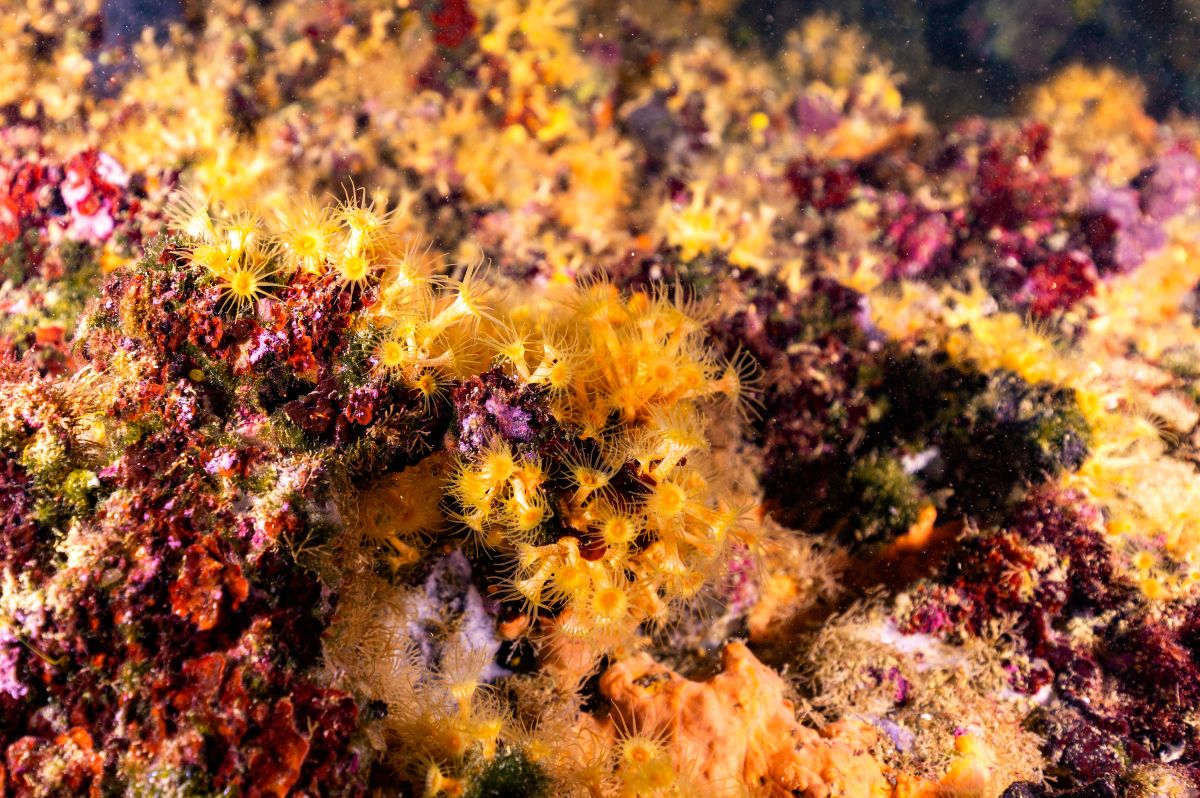
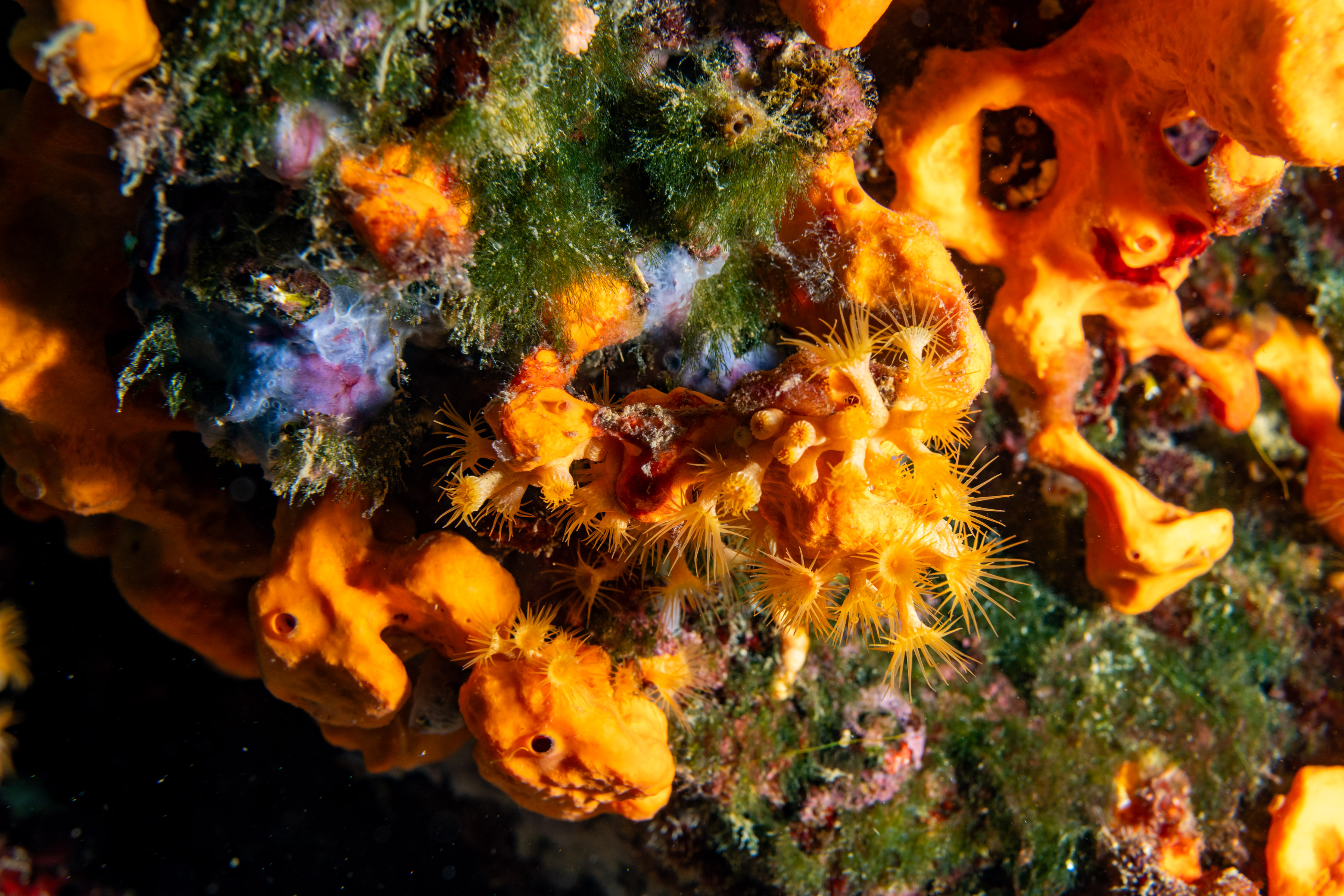
The small cave right at the foot of the rocks is particularly interesting, as it’s home to a colony of yellow coral at a depth of just 1 metre. Resembling tiny flowers of a beautiful golden-yellow colour, they usually live in shady areas and at cave entrances. If you look at them more closely, you’ll see that some are closed like buds, probably because they have caught something. Interestingly, corals are carnivorous marine animals that feed on zooplankton, which they catch with their tentacles. The surrounding rock walls are inhabited by a coralligenous community in various shades of red, pink and orange-green. Algae grow here like forest lichens, resembling small roses. In a hollow, there is a stony sponge shaped like elongated fingers, almost black in colour. Next to it, there’s a small sandy place where cuttlefish sometimes hide.
A nest in the sea
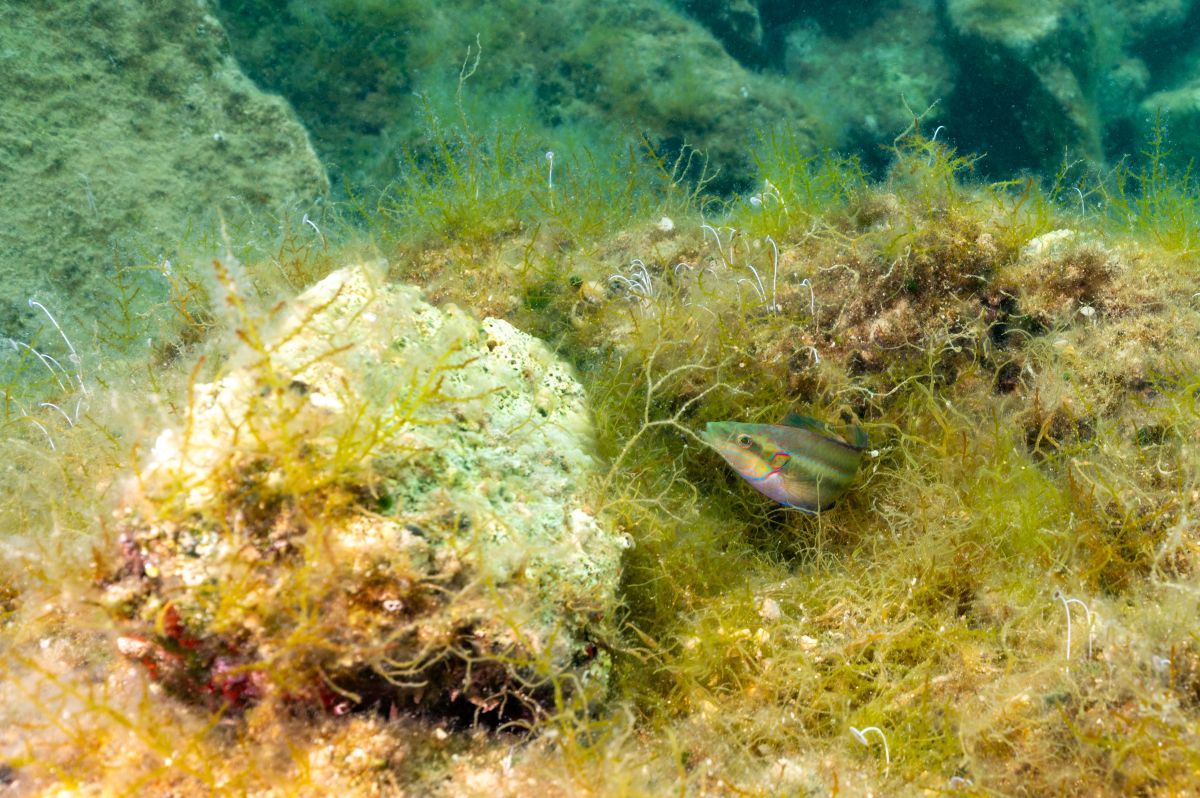
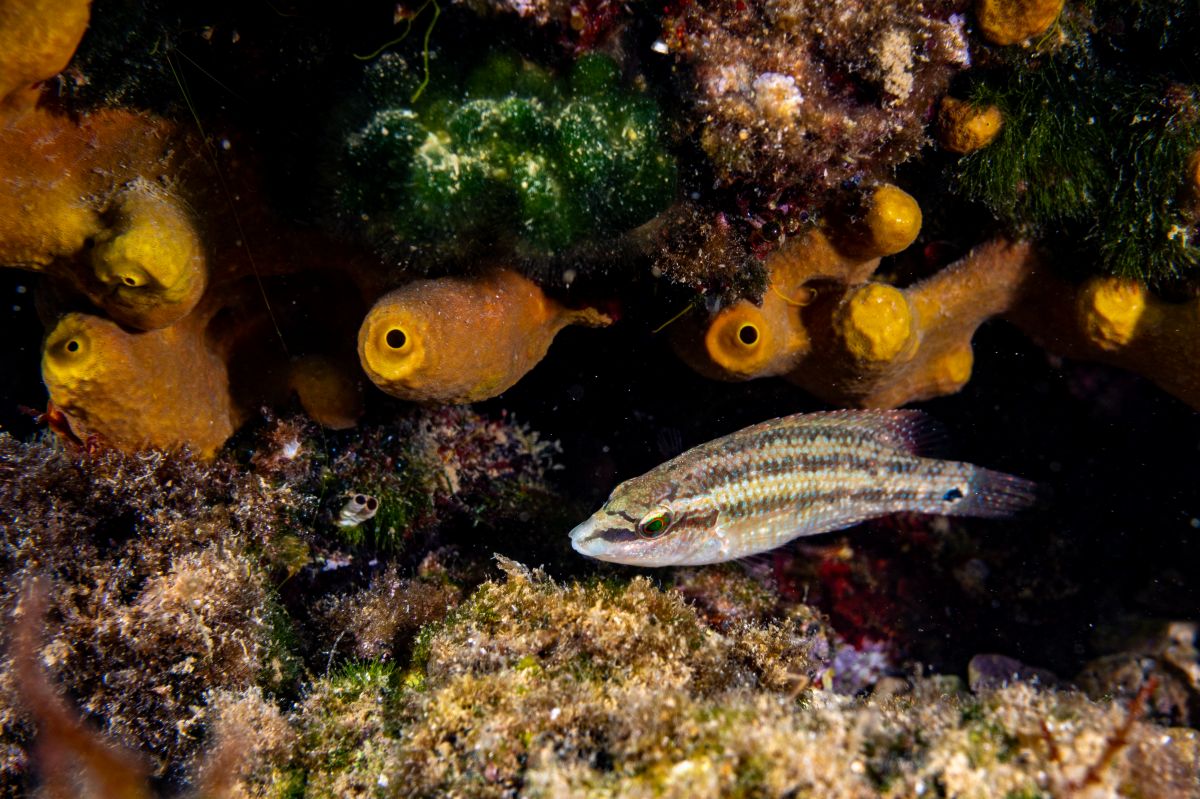
For those who are more confident in snorkelling, larger stones can be found scattered across the sand right below the small cave at a depth of about 5 metres. This is where the ocellated wrasse builds its nest. Several nests can be seen here, resembling those made by birds, except that they are woven from algae.
During spawning, the male builds a nest by carrying small strands of algae in his mouth and weaving them together. It is fascinating to watch, as this tiny fish works tirelessly. It grows to only about ten centimetres in length and can be recognised by its greenish colour, a spot on its gills edged with red and turquoise, and a black spot at the base of its tail. The females are brownish in colour and constantly dart into the nest, as if teasing the male or perhaps testing the strength of the nest. Later, the male also cares for the offspring and vigorously defends their home from predators.
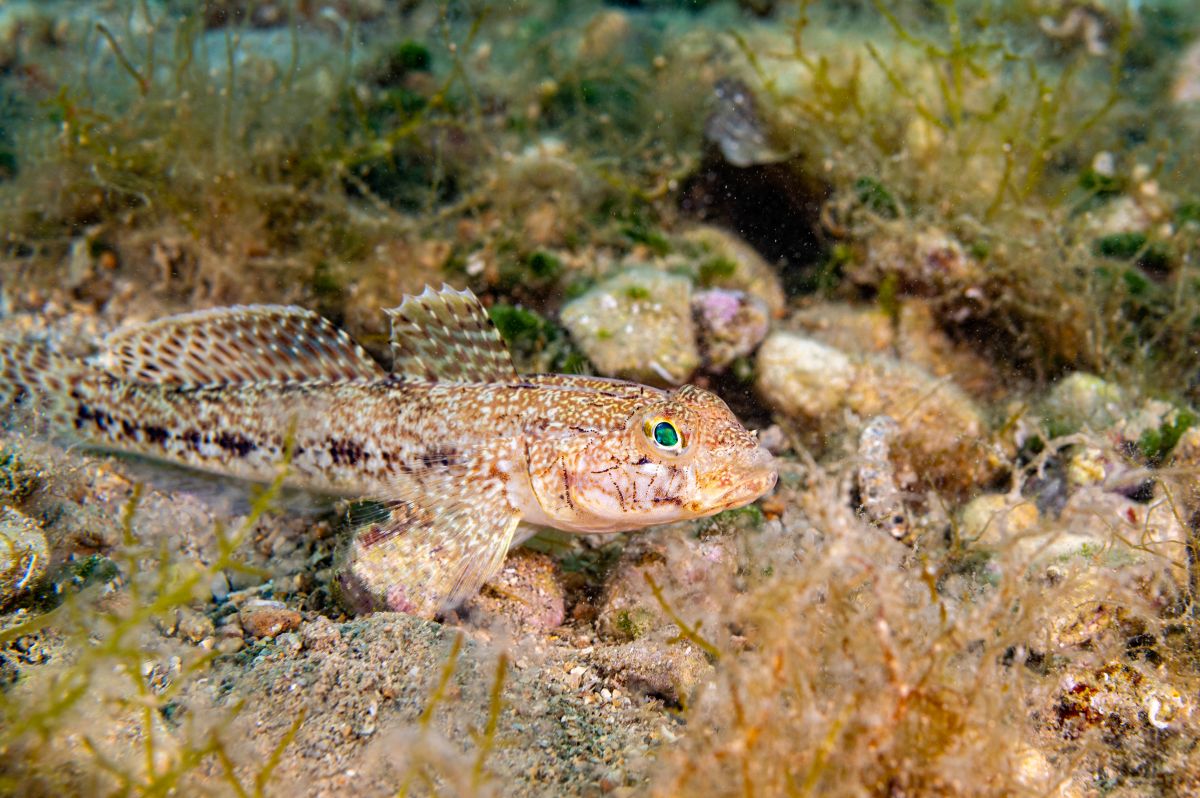
Here on the seabed, you can spot another hard-working little fish, the grey wrasse. It builds its nest on the sand, using pieces of algae and small shells. The grey wrasse is lighter in colour, with a darker spot at the base of its tail, and has distinct green eyes.
An unusual swimmer
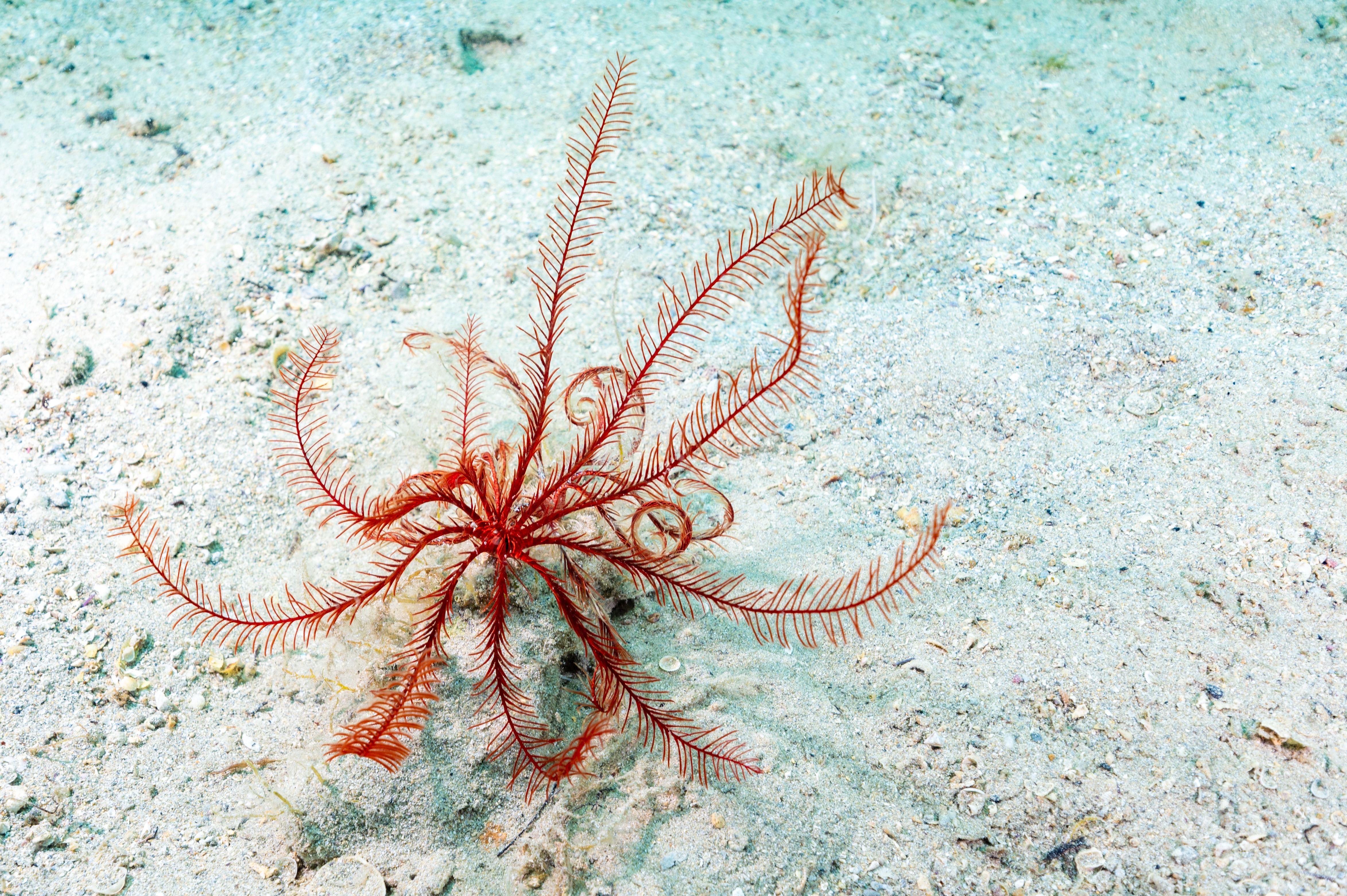
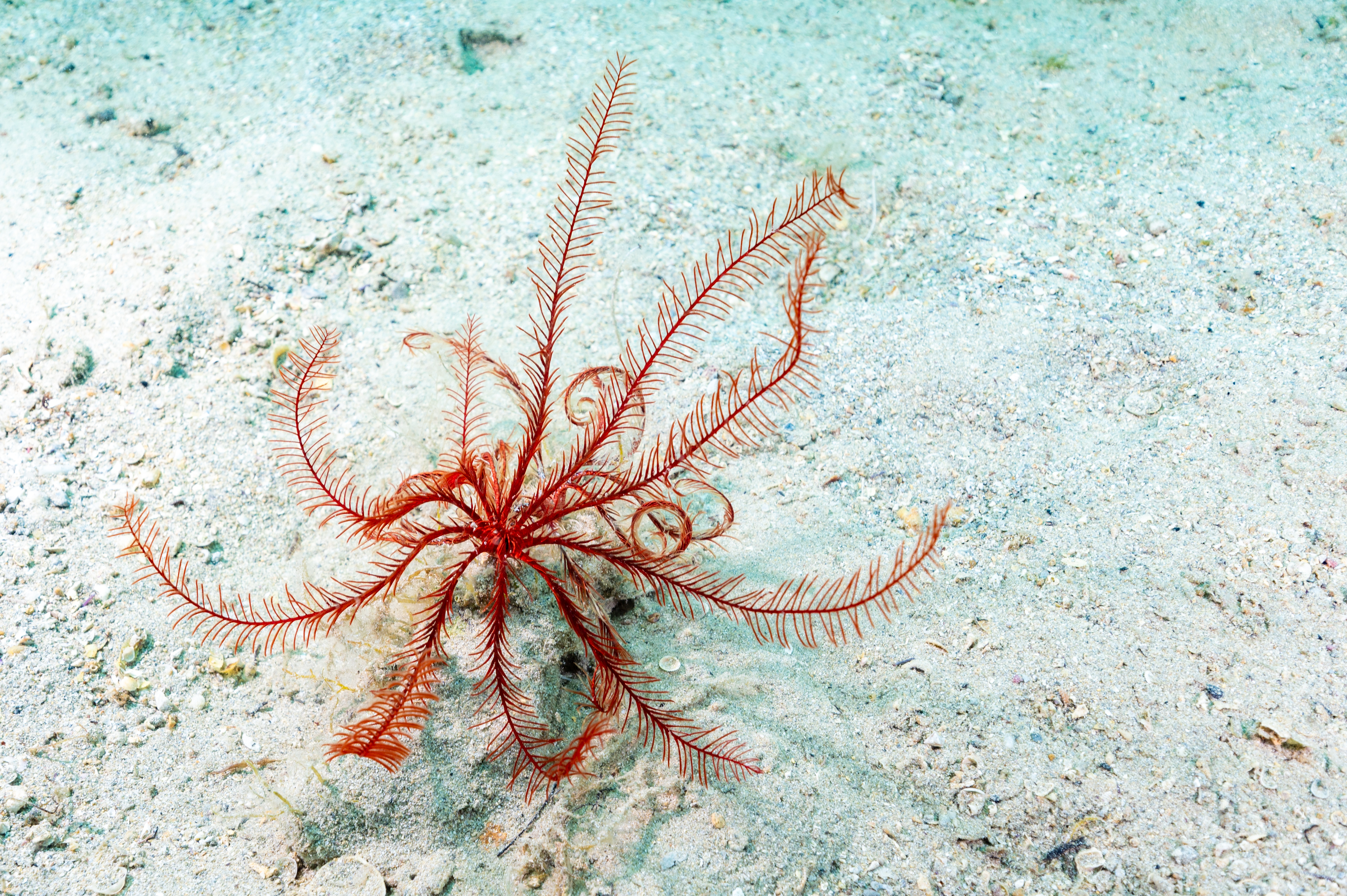
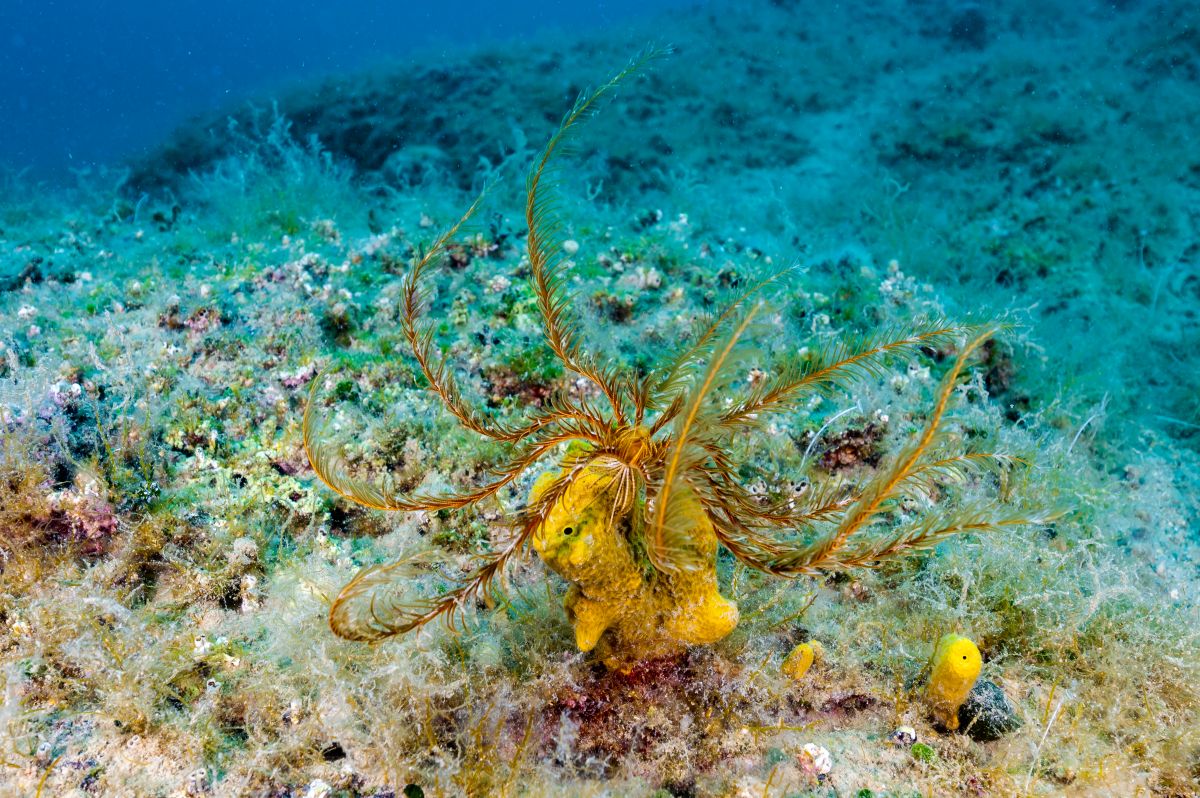
At this location you’ll encounter a very interesting echinoderm – the Mediterranean feather star. Its name comes from the fact that it has several thin, fragile arms covered with pointed pinnules. Beneath its tiny body, it has cirri, which it uses to cling to the seabed. If disturbed or gently touched, it will curl one of its delicate arms or may even move away. Remarkably, it can walk, crawl and even swim by moving its arms up and down. It feeds on plankton and has a great ability to regenerate.
You can continue exploring this snorkelling site along the coastline, where you’ll come across large rocks covered in algae and sea anemones. Here, you’ll find various species of blenny and goby, as well as pointed-snout wrasse, five-spotted wrasse, and Mediterranean rainbow wrasse that you’ll recognise by its bright green and orange lateral stripe.
Heart urchin
On the sand, you may also come across the empty shells of an interesting urchin, the heart urchin (Echinocardium cordatum), so called because of its heart-shaped body. Also known as the ‘sea potato’, it’s covered in short, dense, hair-like spines in grey, yellowish or purple shades, which it uses to move while buried in the sand. Its activity, scientifically called bioturbation, significantly contributes to the mixing of sediment, enhances seawater circulation in the sediment, and aids in the recycling of organic matter, thereby supporting greater biodiversity on the seabed. Feel free to touch its empty shell, it’s fascinating to observe up close! Older shells lose their spines, revealing a pattern resembling a flower with petals – truly amazing!
For the adventurous
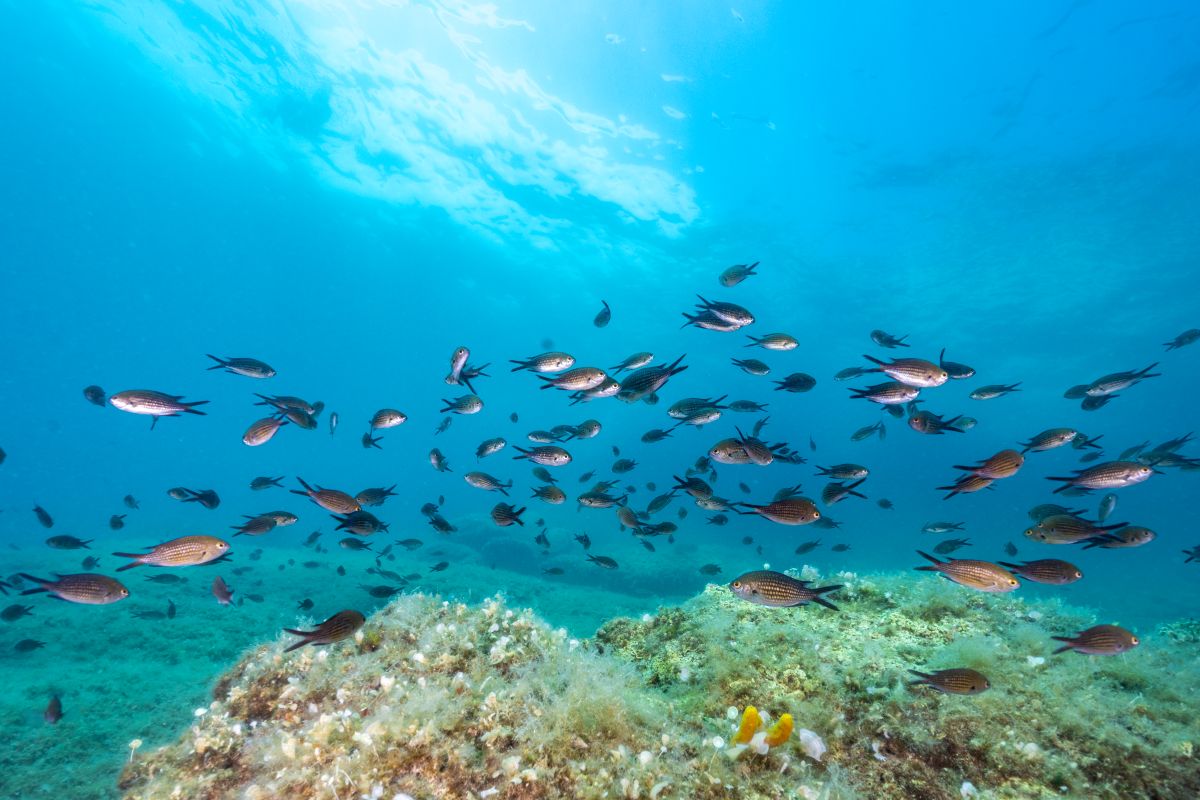
Shipwreck enthusiasts will find a real treat in the immediate vicinity! At a depth of 9 metres, across from the central part of Kačjak pebble beach, lies the funnel of an as-yet unidentified steamship, guarded by a large school of damselfish. If you can dive down to the seabed, you’ll discover even more fascinating inhabitants of this old harbour.
LOCATION 2. - SLANICA COVE (SELCE)
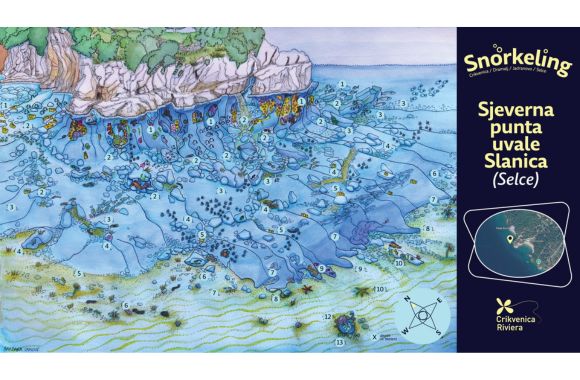
This snorkelling site is located on the northern tip of Slanica Cove, just under 2 nautical miles from Selce waterfront. Sailing out of Selce, you enter something like an open-air museum.
A journey into the past
Few people know that the waterfront in Selce was built of Egyptian limestone from Alexandria. In the second half of the 19th century, Selce was an important hub for shipping and maritime trade. Many families owned large wooden sailing ships, some of which went on long voyages. To avoid returning empty across the Mediterranean and its large waves, and to add extra stability to these light ships, they were loaded with stone blocks left over from the construction of the Suez Canal. This stone was used to build the promenade and quay in Selce.
This harbour was first recorded on a 17th-century map by Vincenzo Coronelli as ‘Selsa’. However, it was most certainly known long before that to the Liburnians, an ancient seafaring people, as this spot has always provided shelter from the bura and jugo winds that can blow with gale force in the Vinodol Channel. As you exit the port, you’ll notice a tall observation tower with a ladder on a small rocky islet – a tunera. In the past, it served as a tuna lookout post, and today is a reminder of the long tradition of tuna fishing from the shore using coastal nets.
There then follows the cove of Slana, whose name means ‘salty’ in Croatian and derives from salt production, probably in the Middle Ages.
After this cove, lush greenery, once planted with olive trees and vines, stretches all the way to Novi Vinodolski.
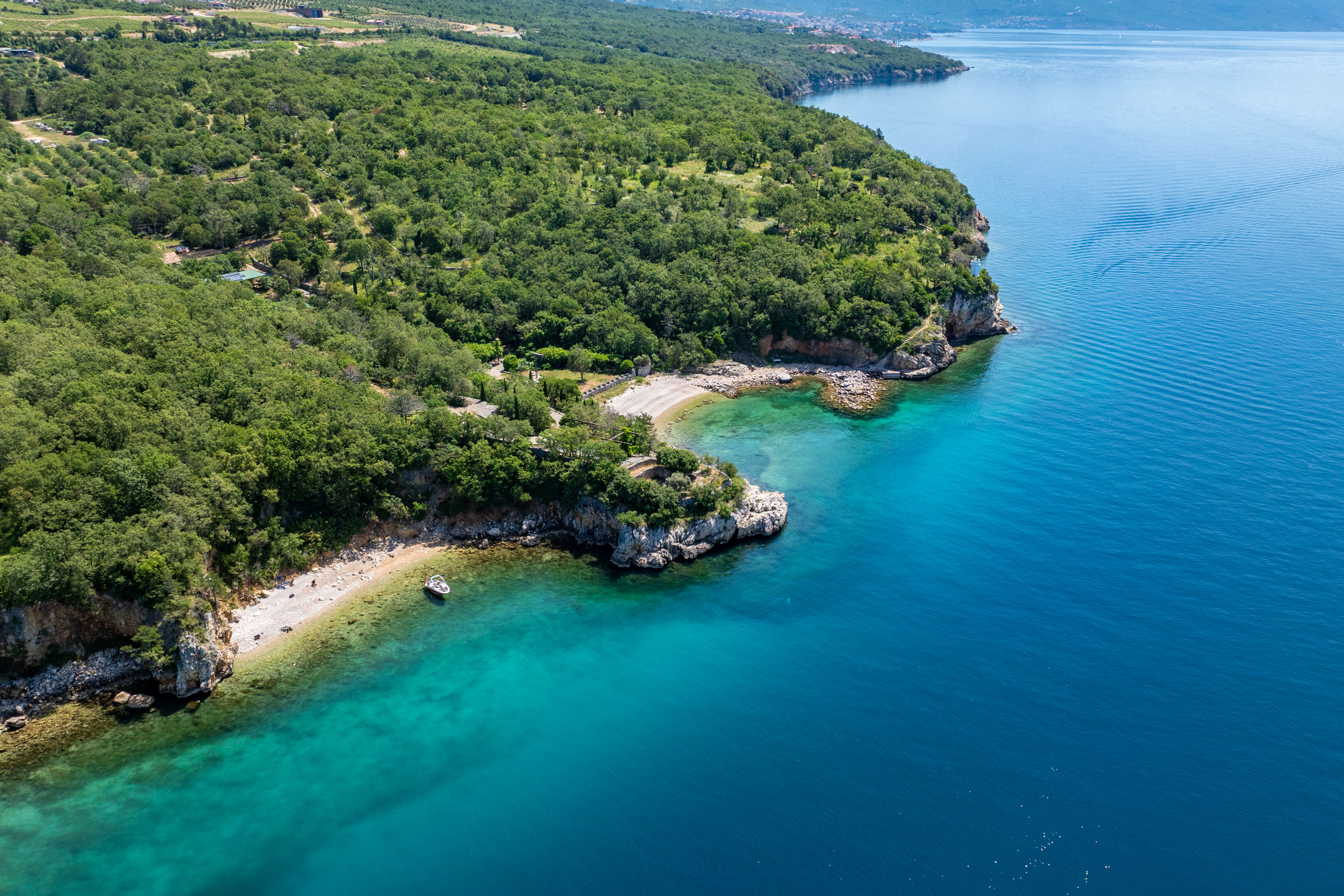
On the way to the snorkelling spot, you’ll notice several lovely coves with natural pebble beaches. Jasenova Cove, easily recognised because of its stone bollards from the Austro-Hungarian period, served as a safe mooring for large ships. The next cove is Slanica, beside which rise the cliffs of Cape Takal headland, with a coastal light built a hundred years ago. The snorkelling site is located on the opposite, lower tip of the cove, next to which there is a small beach.
Water springs surrounded by coral
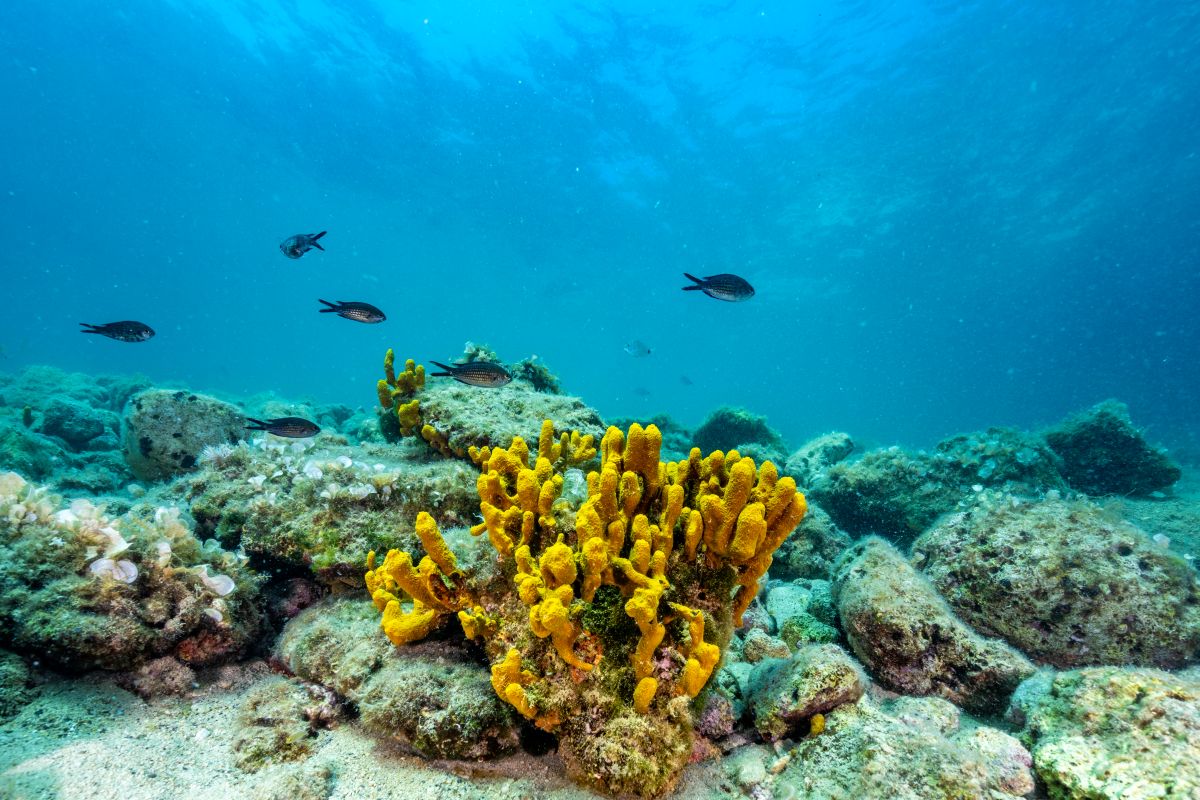
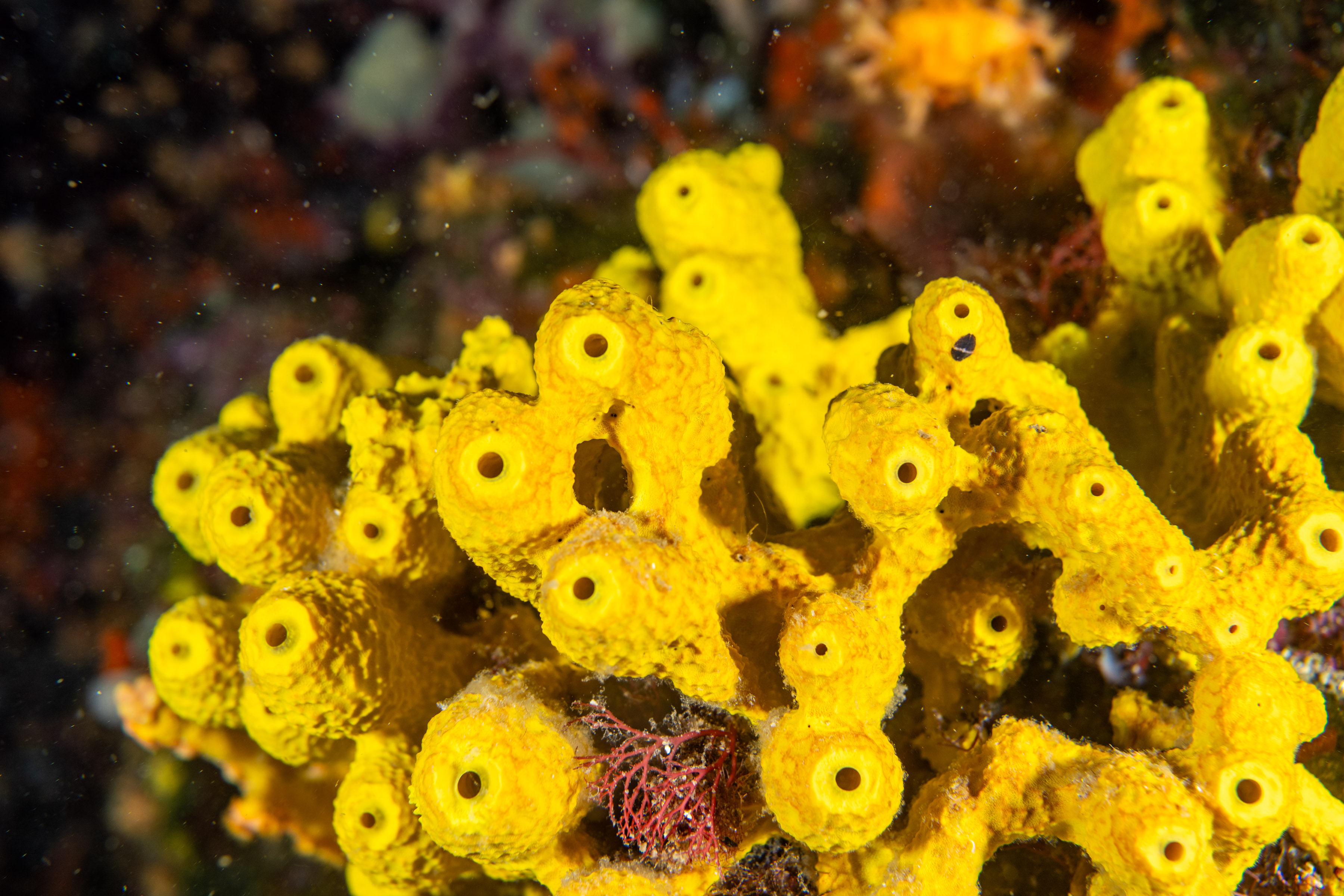
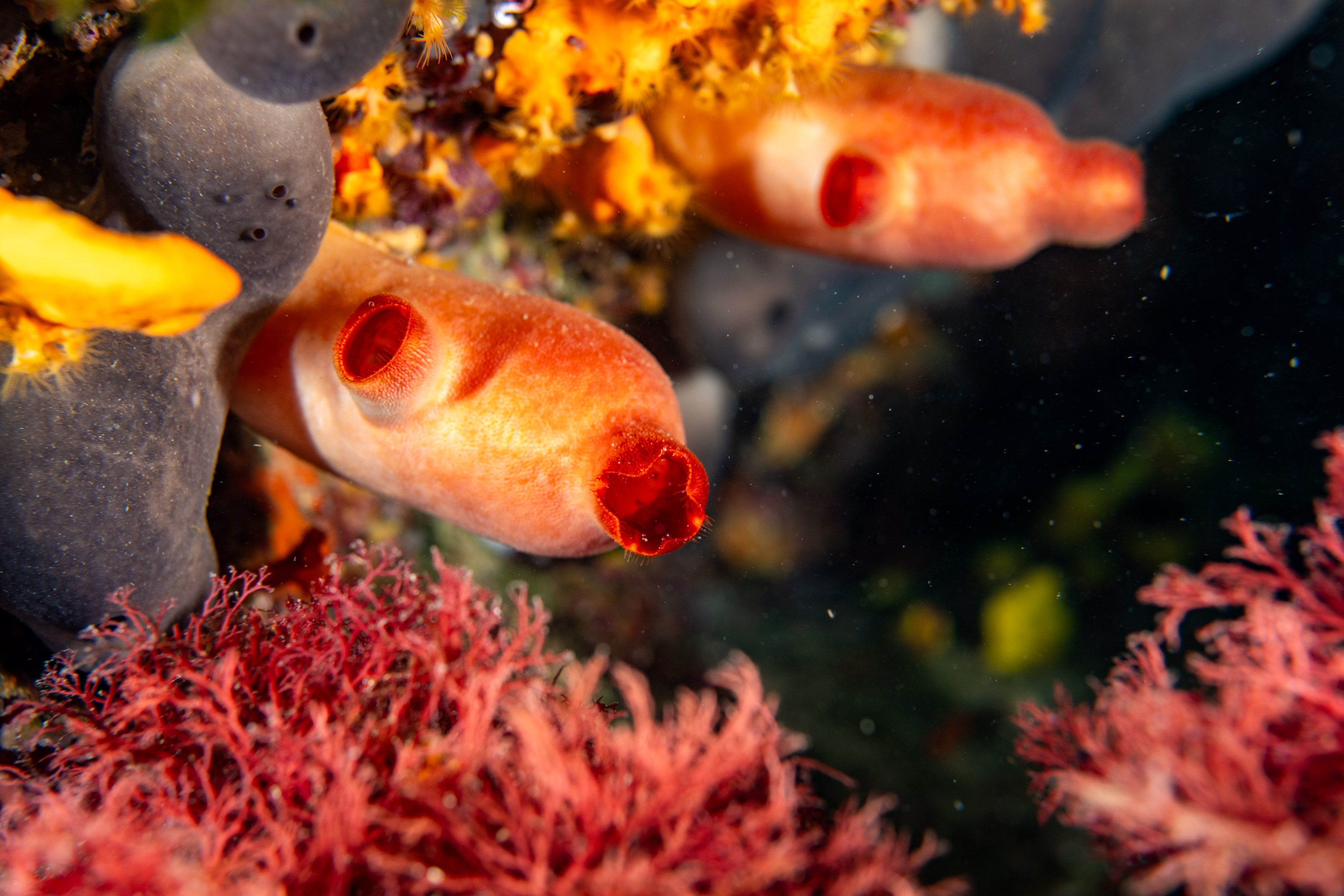
You can start exploring this hidden gem at Borinj, a small beach on the other side of the headland. The shallow area is covered with pebbles that gradually increase in size. As you approach the rocks, you’ll find beautiful examples of the intensely coloured yellow tube sponge, made of vertical tubes that look like fingers. Sponges are animals that filter water for food, thus cleaning our sea.
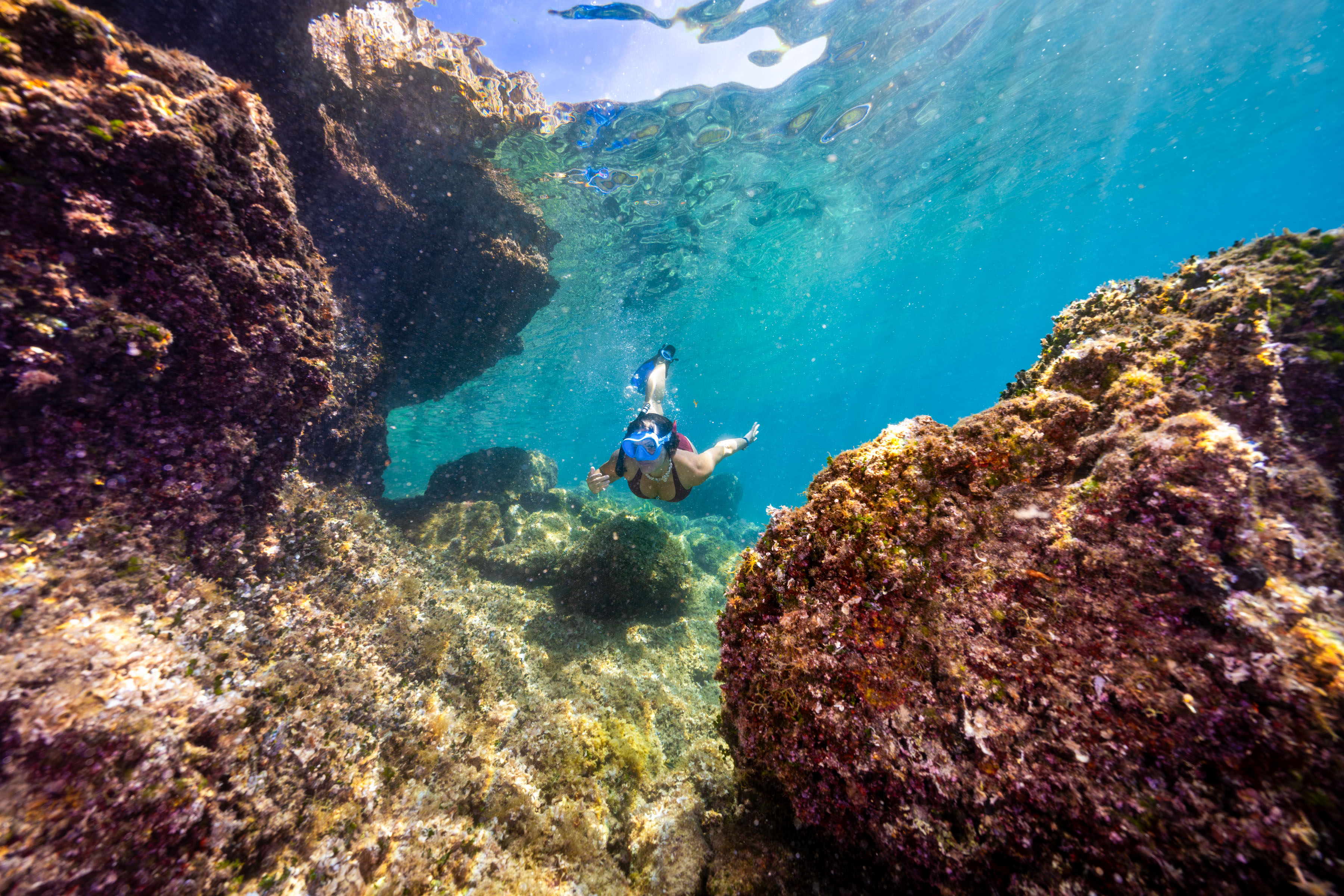
You’ll notice that the rocks near the water surface are curved like small roofs. Look carefully at their walls because in the shady areas, they hide small cavities and crevices that are home to yellow cluster anemones, which look like little flowers. Because of the steep surrounding landscape, each torrential valley has intermittent water flows. These emerge into the sea through underground passages. On this headland, the effect is like a fountain – you can feel the cooler water emerging from the crevices. This is what gives the underwater walls their vivid colours.
Swimming further, you’ll reach a small cave whose edge is adorned with this type of coral, as well as sponges in vivid red and orange.
As you continue, you can see caves tinged in purple-pink hues. Feel free to look a little deeper inside, as it takes a few seconds for your eyes to adjust to the darkness. Then you’ll notice that these algae resemble rose petals and are a wonderful sight! These are calcified red algae.
Not far from there, a real treat awaits you – a semi-open cave where you can swim in a little and take shelter. Its bottom is sandy and extends deeper further inland. The walls are adorned with sponges in unusual colours, and the shady parts of the entrance are framed with yellow sea anemones almost to the surface. It’s fascinating to think that such a cave could have been home to prehistoric humans, but it’s possible!
The small roof continues ahead, and a colony of yellow and orange corals adorn the walls like a work of art. If you look closely, you’ll see that some of the polyps are closed, probably because they’ve caught prey. Corals are carnivorous marine animals, capturing food with their tentacles. They kill their prey with a toxin contained in their stinging cells. Don’t touch them, but you can wave your hand in front of the ‘flowers’ – they will immediately close.
If you continue, you’ll find another smaller cave.
Lively inhabitants of the sea
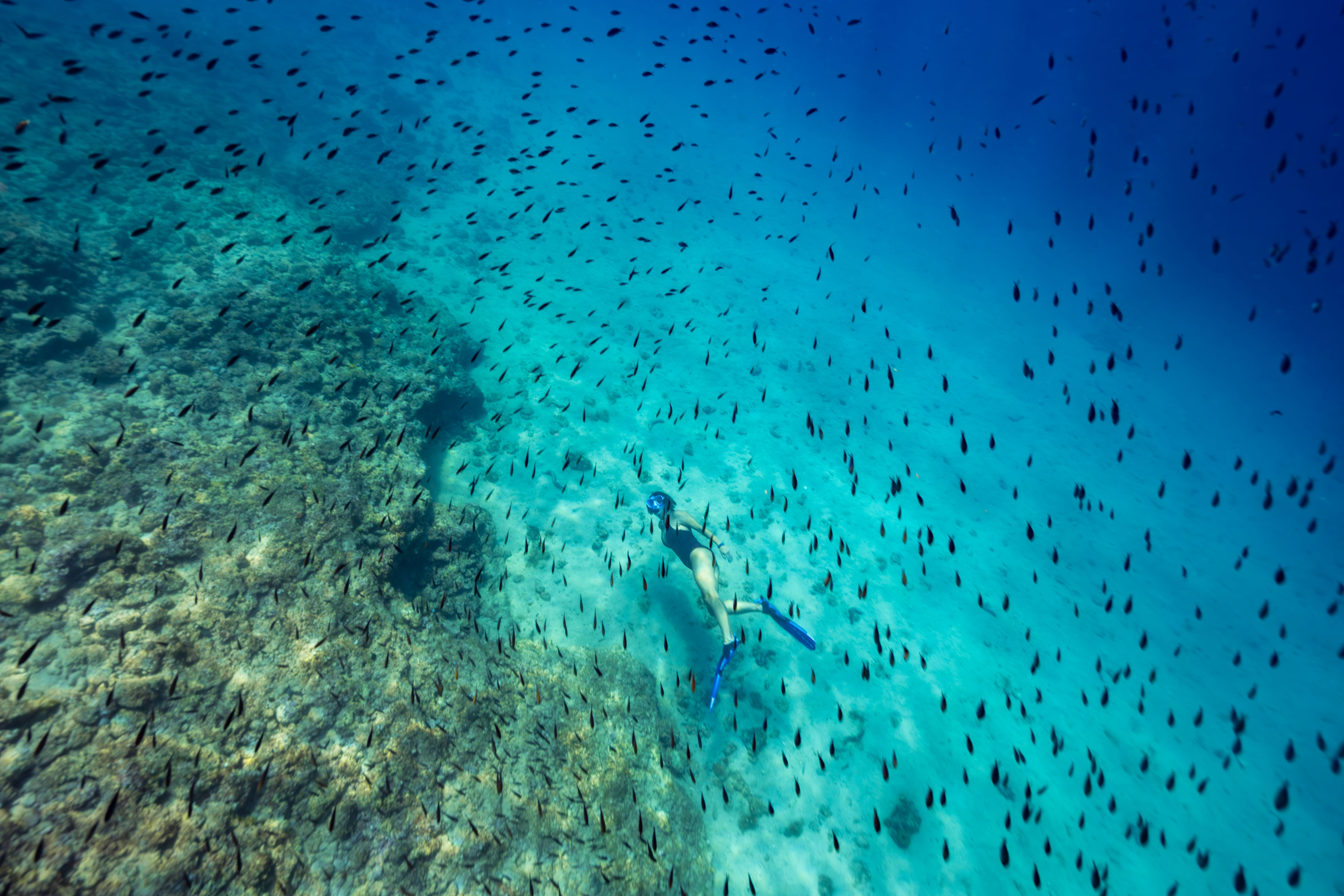
In front of the headland, the shallow seabed teems with life. Schools of damselfish are everywhere, easily recognised because of their black colour. If you look closely, you’ll notice that they resemble coral reef fish. Damselfish are actually their only relatives in the Adriatic. Interestingly, the males guard the eggs, preparing the home by fanning it with their fins. Juvenile damselfish shimmer in electric blue and look very exotic. You can observe them up close, as they don’t stray far.
Approach the large cave quietly and slowly, as a school of common two-banded sea bream is hiding there, accompanied by large specimens of sharpsnout seabream, offering a truly memorable sight! In front of the cave, there are large stones scattered across the seabed, covered in algae, which saupe graze on, while schools of saddled seabream swim around them. Large schools of grey mullet also visit this reef, always on the move.
The smaller fish here on the seabed include the ocellated wrasse, which builds its nest from algae, almost like a bird's nest! If you find one, don’t get too close to it – just wait a moment. The fish will appear with a strand of algae in its mouth, constantly tending its nest.
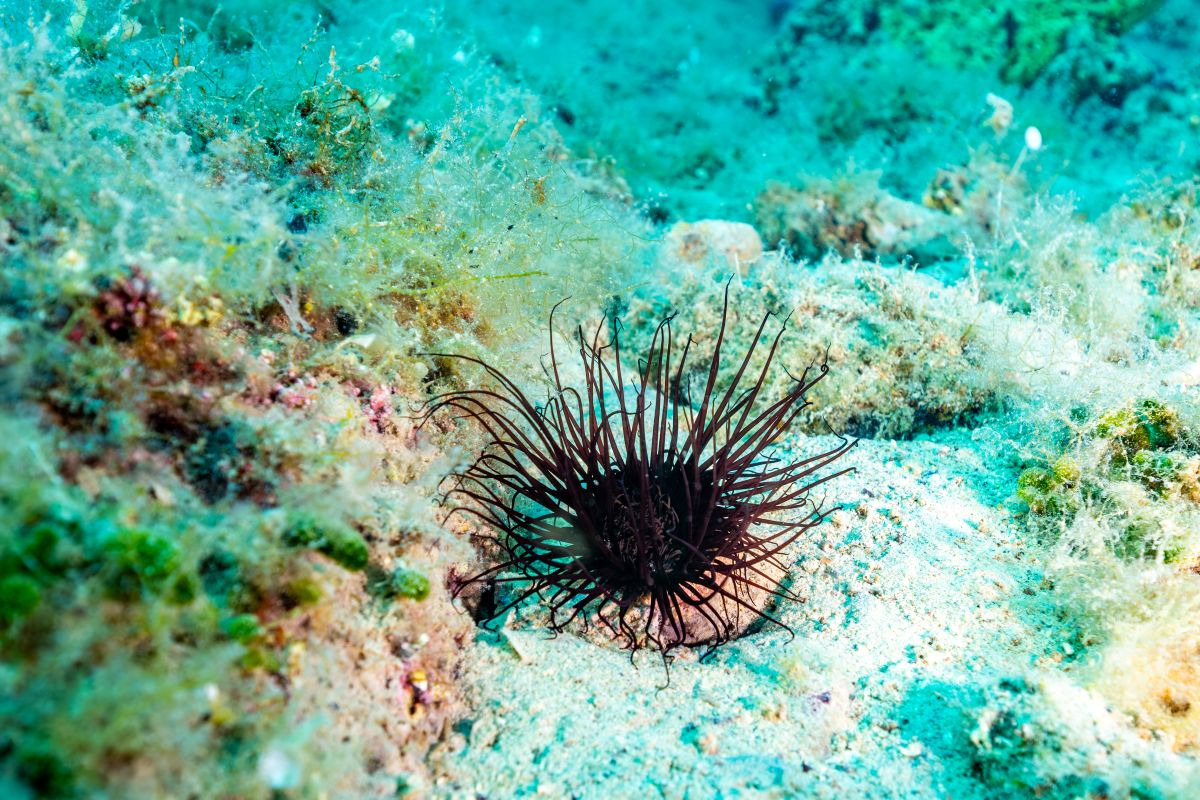
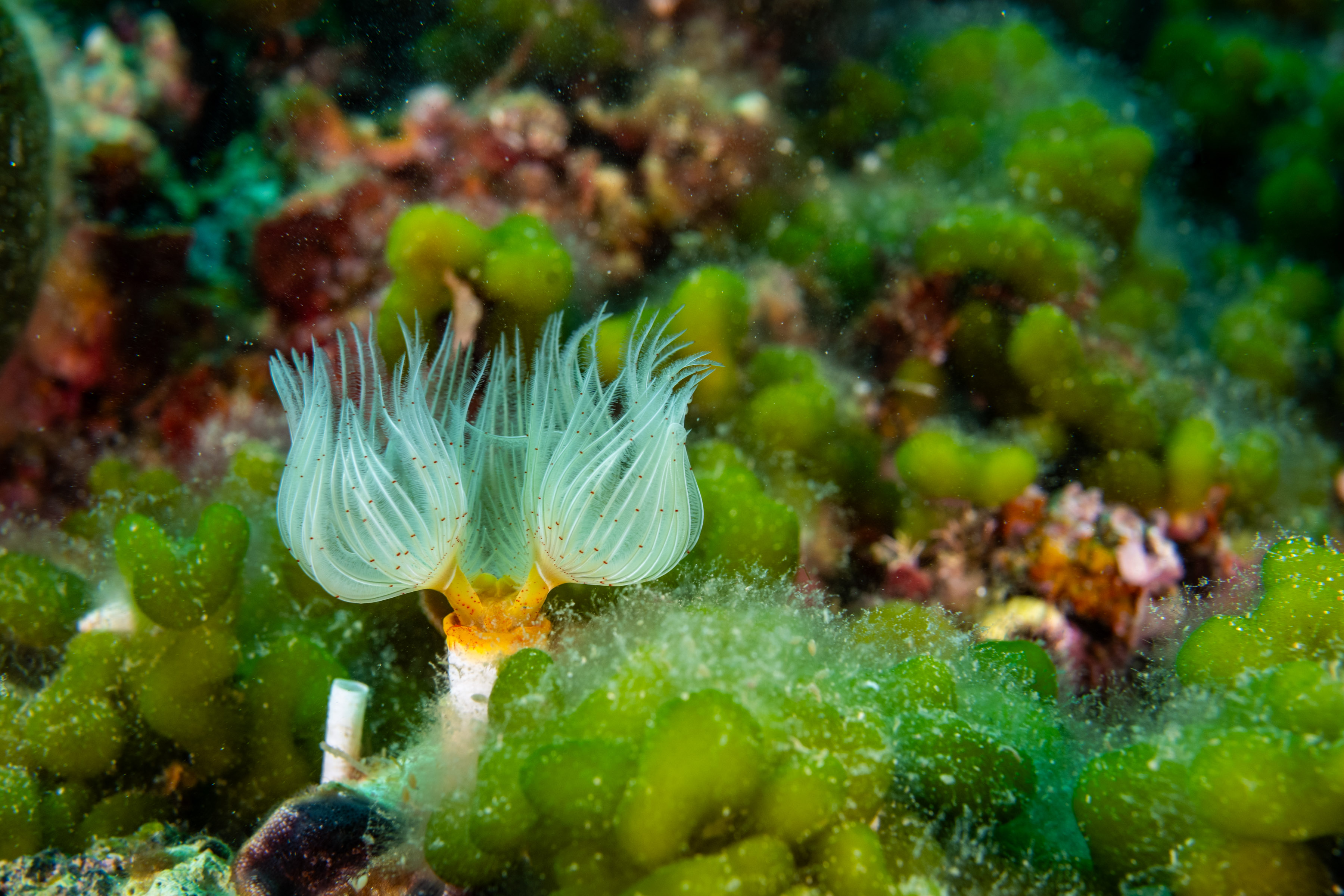
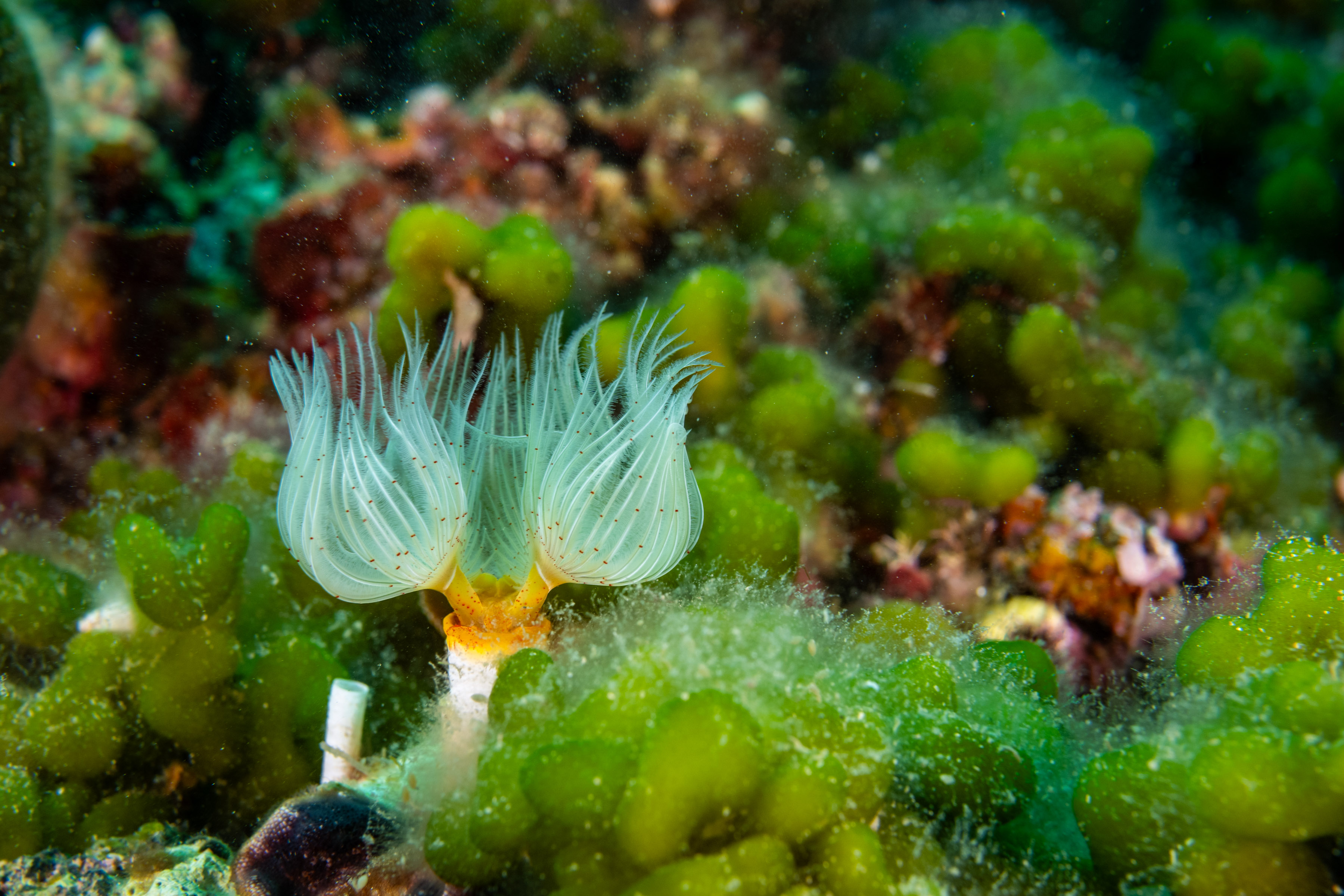
Among other inhabitants, you may spot the painted comber, recognisable by its zebra-like stripes, while the Mediterranean rainbow wrasse will often follow you, as it’s very curious.On the sand near the reef, you can find cylinder anemones with long, chocolate-coloured tentacles, and Mediterranean fanworms that resemble small palm trees with wild ‘hairstyles’.
For those with higher fitness levels
For those who are more fit for freediving, another trace from recent fishing history awaits on the sand in front of the point. Fishermen always mark the position of their nets with a floating marker, and sometimes it can be an empty canister, while a truck tire has often served as a fender for their fishing boat. Today, they lie on the sand in front of the reef and are home to fish, but also to the sea octopus. You will recognize its hiding place by a cluster of stones decorated with seashells.

Safety comes first
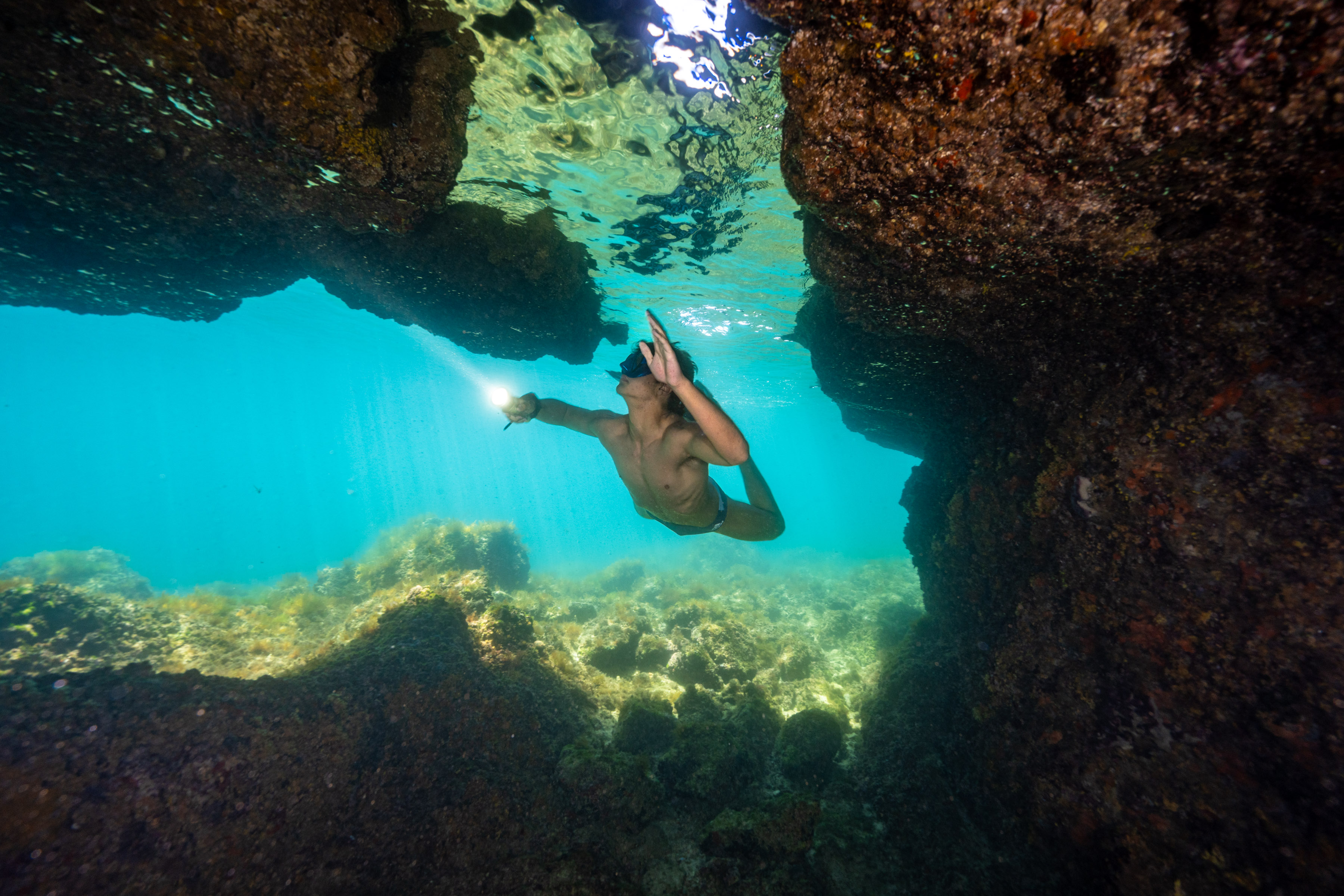
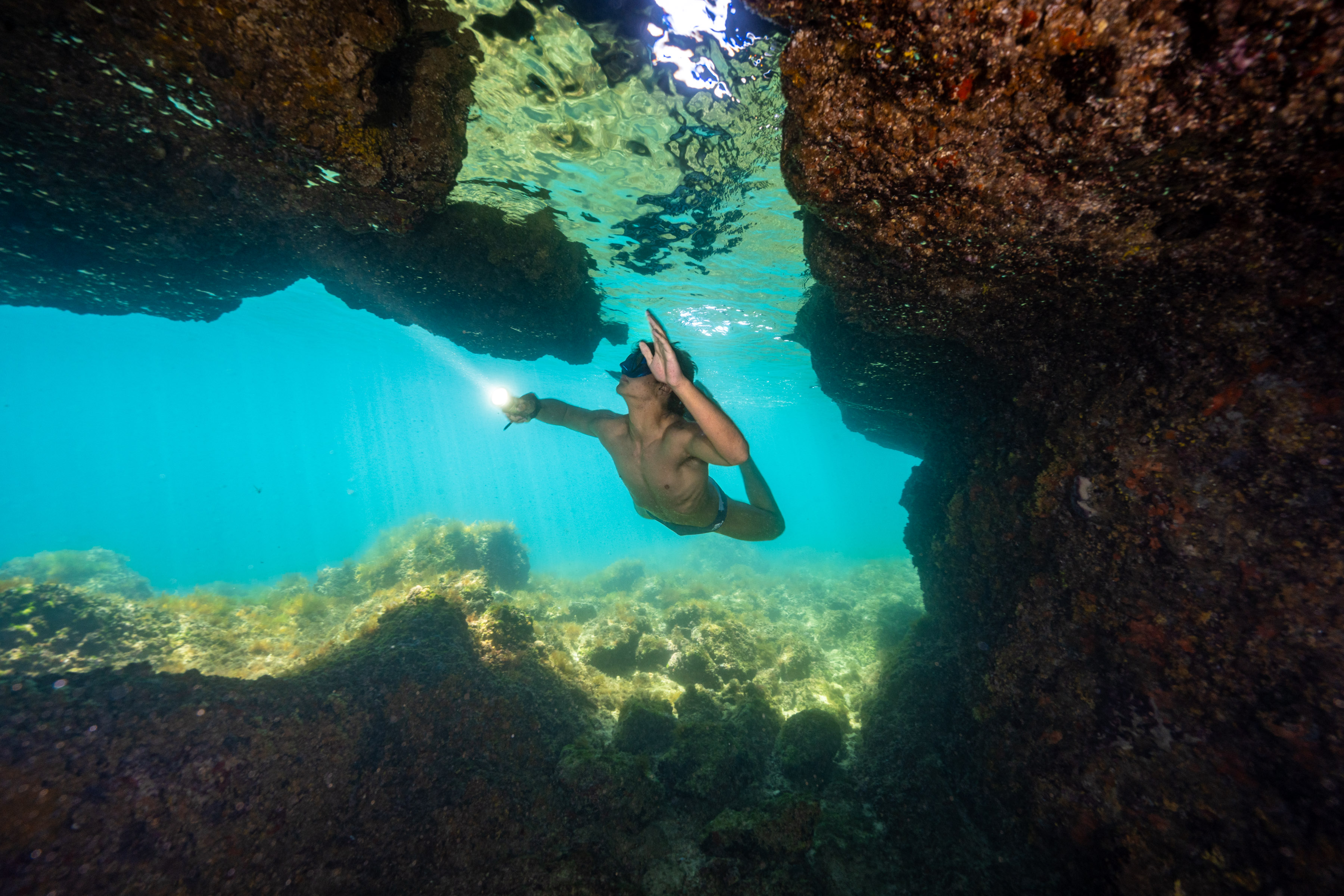
Don’t explore the interior of the cave when the sea is rough, as it could result in a scraped back and a bumped head. However, if you bring an underwater lamp, you’ll experience snorkelling at a whole new level.
Your behaviour can directly affect whether the sea becomes more polluted or better preserved. Enjoy the sea and delight in every living creature, because as long as the sea is healthy, we are healthy too!
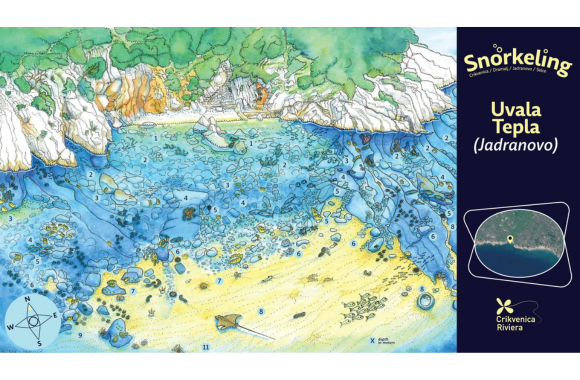
LOCATION 3. - TEPLA (JADRANOVO)
How to reach the snorkelling site
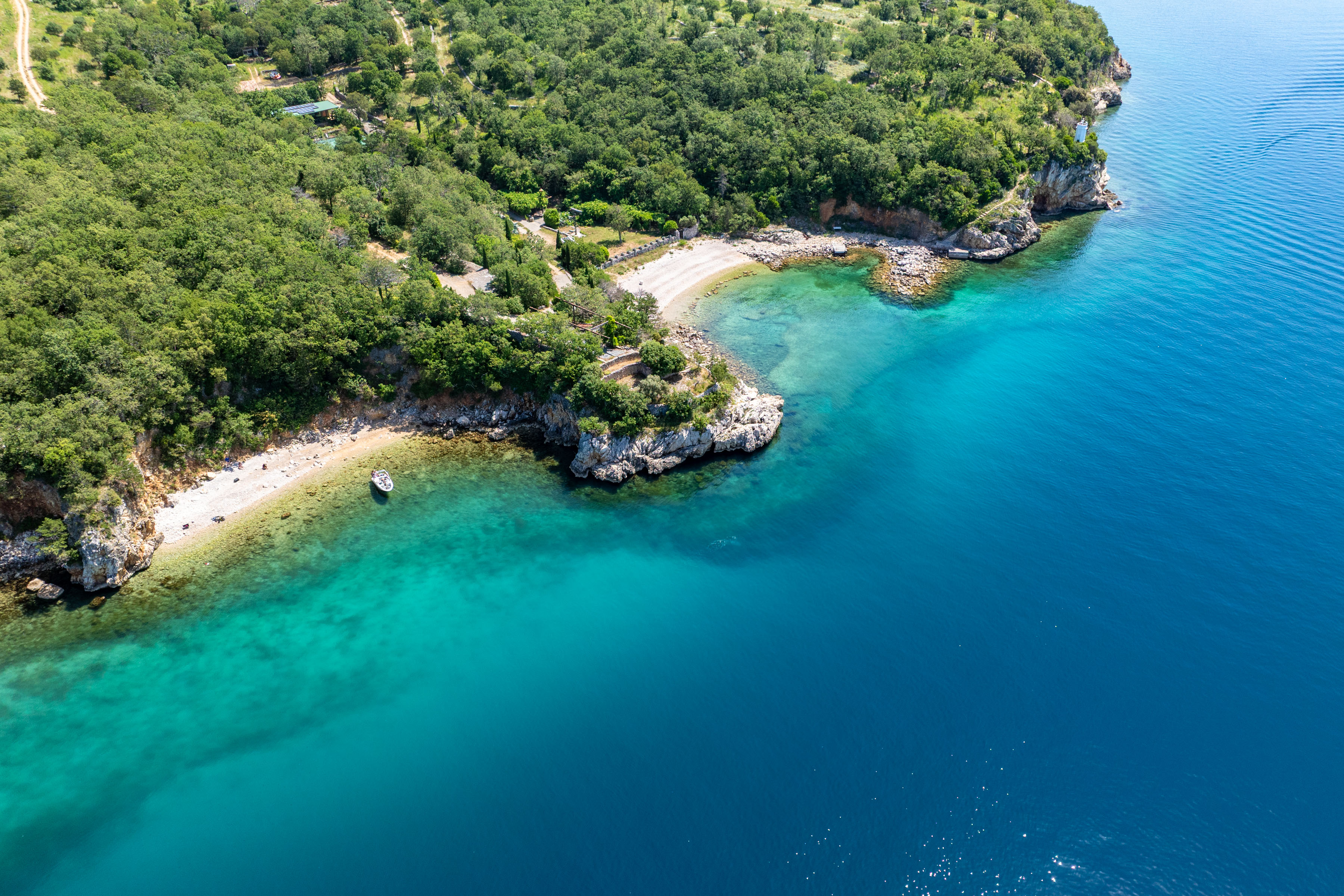
The snorkelling site is located in the waters off Tepla Beach, which can be reached in ten minutes by a forest path from Perhati through lush greenery shielding the beach from passersby. It is also accessible by boat, but either way with a clear intention: to enjoy the pristine nature and tranquility!
Sveti Jakov (Saint James)
Once you step onto the small beach with its fine pebbles and take in the view of the surrounding landscape, you’ll understand why Saint James is depicted in a small niche in the rock: this is the right place to rest your body and soul!
Saint James is the patron saint of Jadranovo, and the locals are known as Jakovari after the Croatian name of their patron saint (Jakov). Local tradition has it that a time long ago, a ship sought shelter from a storm in a nearby cove; its sailors went ashore and took refuge in the Chapel of St James. It was so cold that they burned everything they could find inside, even the statue of Saint James. Yet it refused to burn. They then threw the statue into the sea with a stone tied around its neck, but it refused to sink either.
As soon as the weather cleared, the ship resumed its journey. However, it was struck by an even fiercer storm and vanished beneath the waves, taking the crew with it. The locals, who considered this a just punishment, took the statue from the sea and returned it to the altar. To this day, the legend of the statue’s discovery in the sea and rescue is reenacted on the occasion of the local annual festival.
Underwater curiosities
In the shallows, a large rock juts out: lurking around it are the fish known as tompot blennies, recognisable by their brownish bars and tentacles resembling deer antlers.
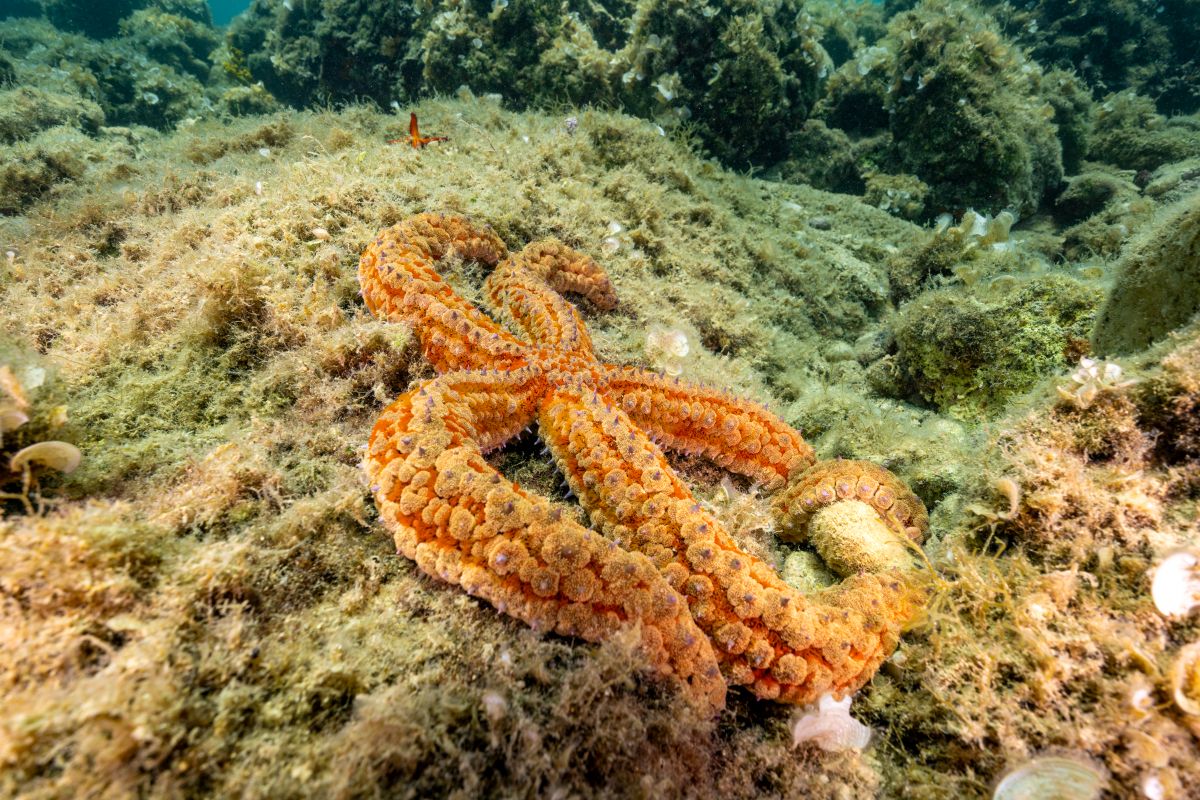
The seabed is strewn with large stones, stretching down towards the sandy bottom. Here and there on the stones, you can spot finger-like yellow tube sponges adorning the seabed. Schools of small and large saupas grazing on algae are fascinating to observe up close, but you’ll have to sneak up on them! Here, you can also find large specimens of the reddish-brown spiny starfish, covered in spines. It is a voracious predator: if you watch it for a while, you’ll notice other starfish and even sea urchins getting out of its way, because they are all its prey.
On the sand live scallops, beautiful, fan-shaped shellfish with tentacles protruding from their mantles. When threatened, the scallop escapes by opening and closing its shell.
This shell is also a symbol of pilgrims because it once served as proof that one had completed the Way of St James (Camino de Santiago), upon which it would be used as a cup for drinking water.
On the deeper sandy bottoms, you might spot bull rays resting or slowly gliding, bird-like, just above the seabed. The bull ray’s back is greyish-green with darker stripes, while its head resembles a flat duck bill as it digs in the sand. Its ‘flight’ is a magnificent sight that will remain in your memory.
Underwater walls
The edges of the beach on both sides are also interesting to explore, as they resemble sea walls with rocky overhangs. Just follow the shallowest shoreline, and observe carefully. Some of the walls are richly adorned with red and green algae, as well as dark crimson sponges. In the shaded areas, large schools of big-scale sand smelts hide: you can herd them much like a shepherd. Perhaps the most beautiful sight is diving beneath the school, as they shimmer like silver! In small hollows and crevices, you might also spot a large black scorpionfish, closely related to red scorpionfish but of a darker brown colour.
Beneath the rocky overhangs, you may find saddled seabreams and common two-banded seabreams resting, while curious Mediterranean rainbow wrasses and a cheerful school of damselfish might join you as you explore the larger boulders.
For those with more snorkelling fitness
For enthusiasts of greater depths, the sandy seabed further off the beach conceals many interesting creatures, such as cylinder anemones with their long, chocolate-brown tentacles.
The Mediterranean feather star also lives here. If you wave your hand near it, it will move its feathery arms or even move away, as it can swim in a rather funny way or walk using its tiny cirri, which resemble small roots. It belongs to the crinoids, ancient creatures even older than the dinosaurs! Their fossils are known as index fossils because they help determine the relative age of the rocks (Palaeozoic!) on which they are found. You might also find empty shells of the hairy, light-purple heart urchin that lives buried in the sand.
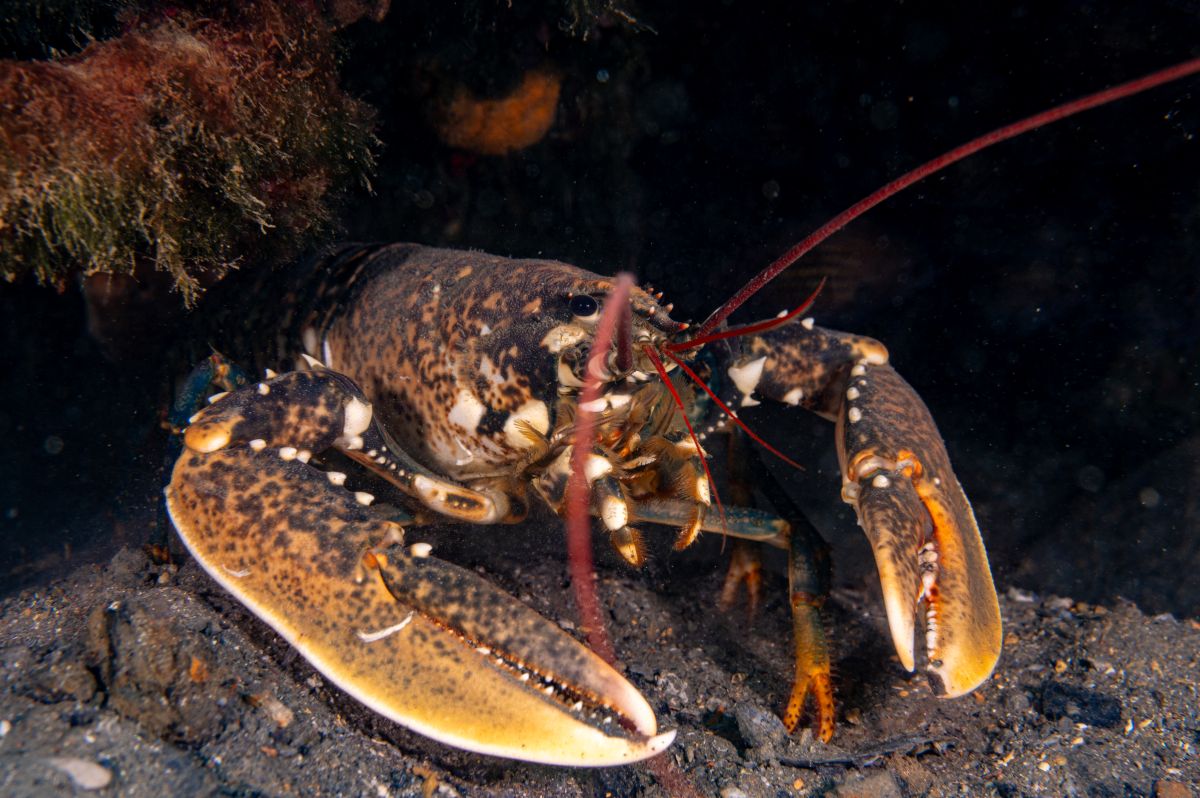
On this seabed, you might encounter schools of gilt-head seabream and red mullet, some solitary greater weever and the common sea cucumber. While in the past its meat was used as excellent bait for prized fish species, today it is a strictly protected species due to its vital role in maintaining a healthy and ‘clean’ marine ecosystem.
The sea cucumber feeds on organic waste that accumulates on the seabed – that is, it recycles waste by consuming various bacteria and returning nutrients to the environment, thereby encouraging marine life. A single sea cucumber can ‘process’ up to 80 kg of sediment per year. So, the next time you dive into sea that’s clear and turquoise, you should know that it’s partly down to the sea cucumber!
Our relationship with the sea
Life in this coastal area has always been connected to the sea: people using it as a source of food and sailing across it, connecting nearby and distant shores, linking destinies, and exchanging products, stories and customs. For many, the sea is a source of inspiration and income, as well as a remedy to lift the spirit. Tepla Beach is located right next to the ‘Wave Trail’, which connects the entire Crikvenica area, and offers the opportunity to escape daily life even in the cooler months of the year.
Climate change is bringing far-reaching consequences, including sea temperatures that remain pleasant for swimming even into early autumn. Under the watchful eye of Saint James, depicted on this beach, spending time in pristine nature heals almost any ailment!